
Part 3: Is A Good Thing
The eating experience aboard this ship was truly unbelievable. I was hoping I could still fit in my pants by the end of the voyage.
The buffet was one of our favorite places to eat. It was never real busy, and the food was plentiful and varied, from custom cooked omelets and grilled mahi to every kind of cheese, meat, and dessert, to a salad bar that was unmatched anywhere.
But that was just one of the many eateries aboard.
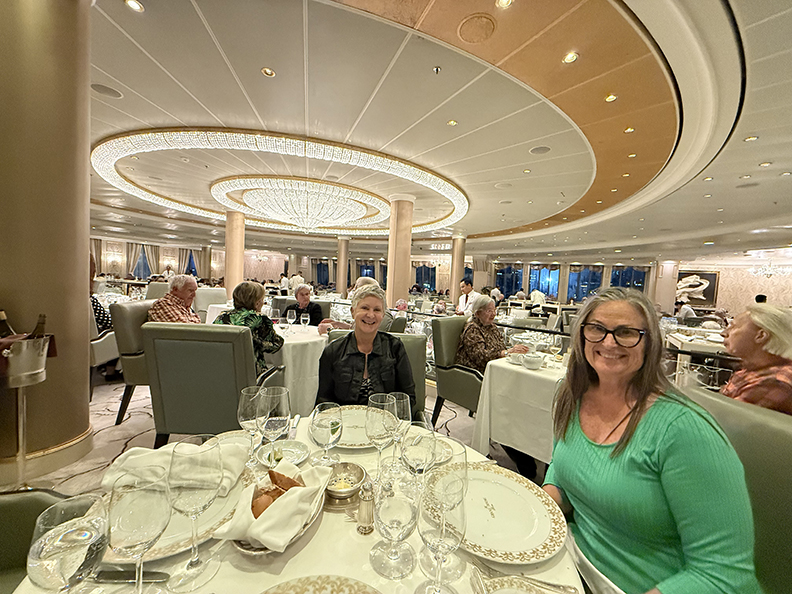
The Grand Dining Room is a white tablecloth, formal restaurant where you can order what you want from the menu, which offered great breakfasts, lunches, and dinners. No reservations were required, and there was never a wait. The service was almost scary as waiters hovered to get you whatever might be needed.
There were also specialty restaurants, for which you had to have reservations. We’d booked weeks ahead of the voyage online. There was Tuscana, one of the finest Italian eateries I have ever had the pleasure of eating at, and the Pollo Grill, a steakhouse extraordinaire, and of course Jacques French cuisine. If you were wanting great seafood & sushi, you could go to Red Ginger, and there was the Terrace Cafe, Waves Grill, and Horizons for an excellent dinner.
Eating seems to be a way of life on this ship. But there was a lot more to do aboard. There was the full gym to TRY and work off all the calories we were consuming.
But there were a lot of other ways to spend the day. After all, Riviera is 785 feet in length, and as she enters a harbor, she does draw attention. But the less than 1000 passengers meant no lines and a lot of things to do.
Our next stop was in Hokkaido. Hokkaido is the northernmost of Japan’s main islands. It is known for its volcanoes, natural hot springs, and ski areas. Rugged Daisetsuzan National Park is home to steaming, volcanic Mount Asahi. Shikotsu-Tōya National Park contains caldera lakes, geothermal springs, and a Mount Fuji look-alike, Mount Yōtei. Popular ski resorts include Rusutsu, Furano, and Niseko.
Jeff and I went to see our personal concierge, just down the corridor, and he explained that this town is world-renowned for seafood and especially sushi. We could always use more sushi, so we grabbed our umbrellas and headed out for another adventure. We were told about a mom and pop sushi restaurant that was phenomenal, and we thought, Hmm, more sushi. Let’s go. We walked in some light rain through a local fish market with countless tubs of oysters, clams, snails, huge scallops, and an aquarium with the largest live octopus I’ve ever seen. At the end of the fish market, we flagged down a taxi, and not knowing Japanese, we showed him the name of the sushi place on a printout the concierge gave us. So you know it’s exclusive when the local taxi driver has never heard of it and has to call for directions.
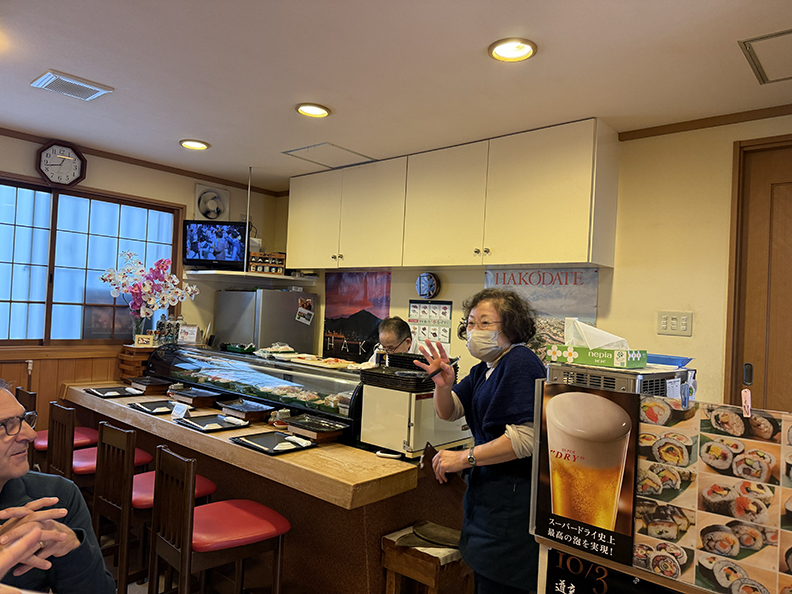
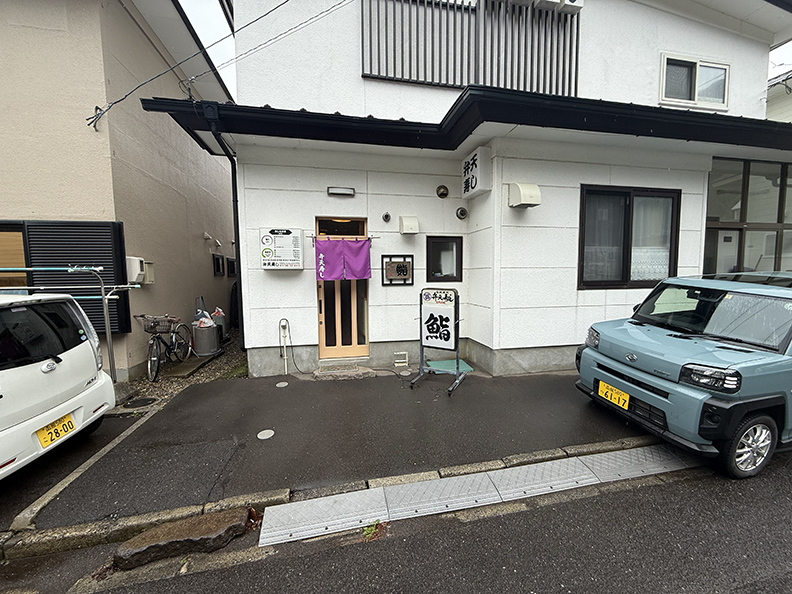
This was an adventure to the non-tourist area. A few kilometers out of town, located on a small alley, we found a small door. Opening it, we found a couple from Shanghai eating and one other table! Talk about your small mom & pop operation; this was it. Pop was behind a small counter cutting and creating sushi dishes, while Mom handled the orders and getting drinks. The whole place was about 12 feet wide and maybe 30 feet deep. There were two tables, one for two and one for four people, and four chairs along the front of the sushi-making area. It was some of the best sushi we’d ever had
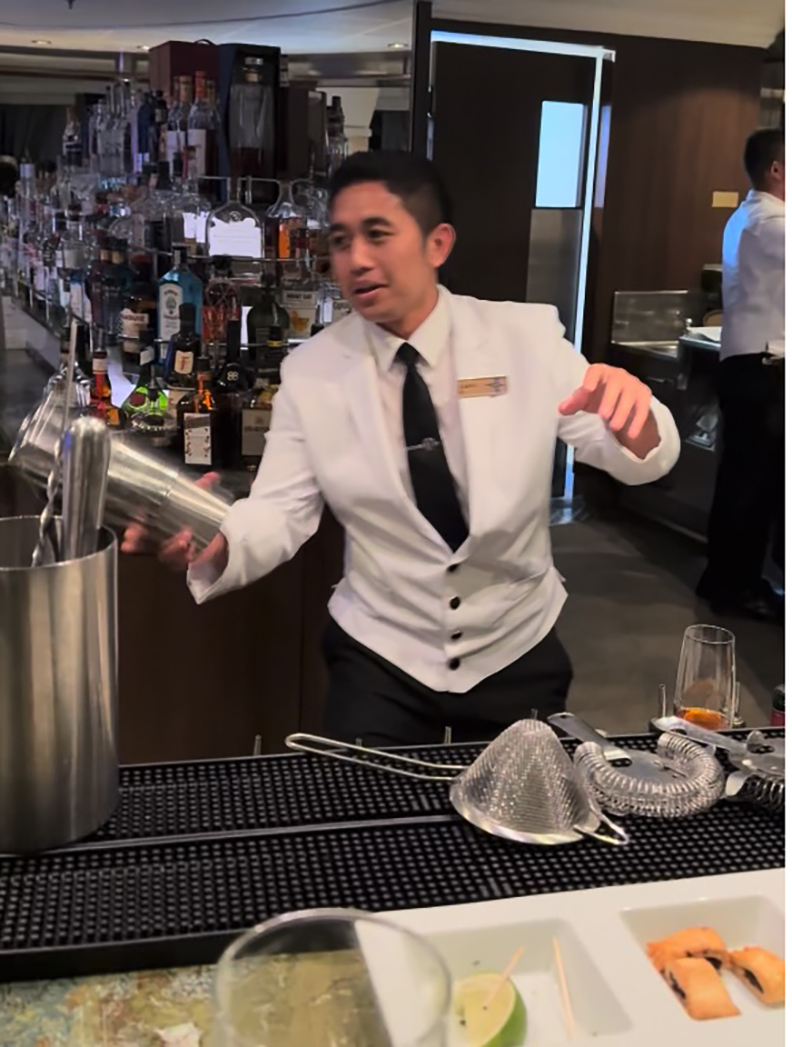
Back at the boat we ended the day in the Horizons Lounge, where our favorite bartender, Kadec, took great care of us. The lounge was never crowded, and the drinks were, well, let’s just say they didn’t go light on the alcohol.
Once again we took off in the late afternoon and headed for our last stop in Japan, the town of Sapporo.
Sapporo, capital of the mountainous northern Japanese island of Hokkaido, is famous for its beer, skiing, and annual Sapporo Snow Festival featuring enormous ice sculptures. The Sapporo Beer Museum traces the city’s brewing history and has tastings and a beer garden. Ski hills and jumps from the 1972 Winter Olympics are scattered within the city limits, and Niseko, a renowned ski resort, is nearby.
We would be departing for the Bering Sea and Alaska fairly early, so we opted to take a taxi tour of the town as opposed to walking. Not sure if we mentioned this earlier, but both Jody & Bob had to use canes, as Bob had a hip replacement that didn’t quite heal right, and Jody was set for a hip transplant on their return to California. Getting old sucks!
But our tour definitely did not suck. Our cab driver was probably the most polite man in the country. At every stop he’d get out, take a group picture of us, and never stop smiling.
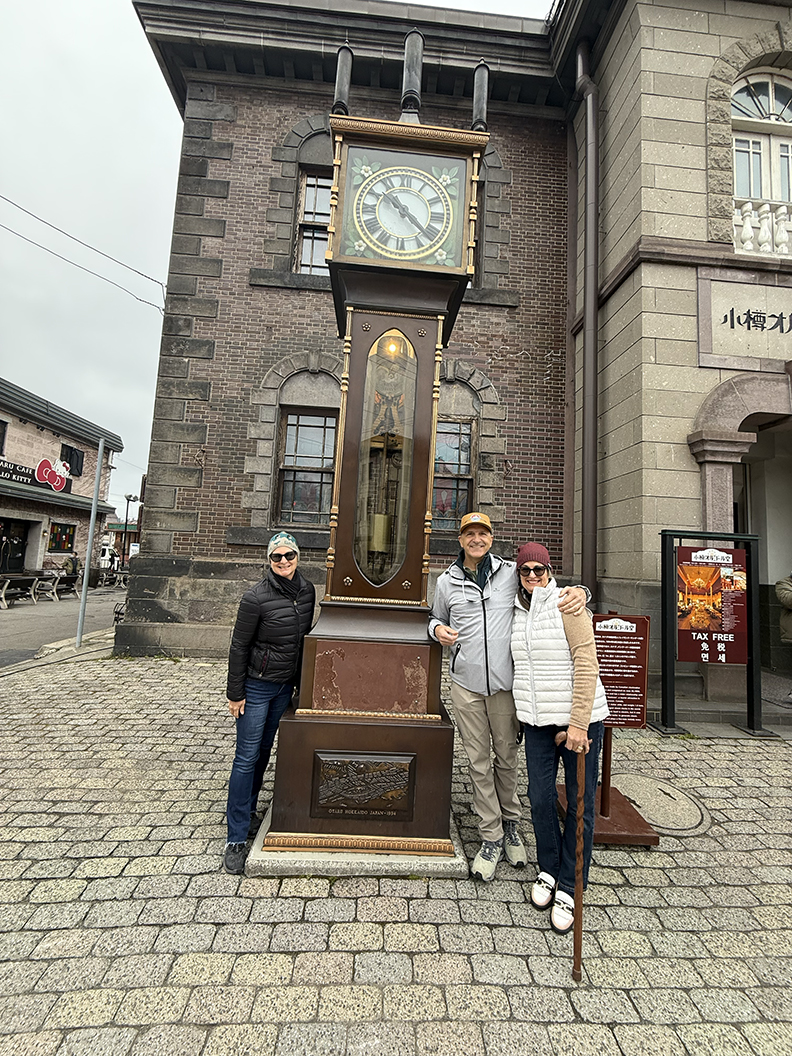
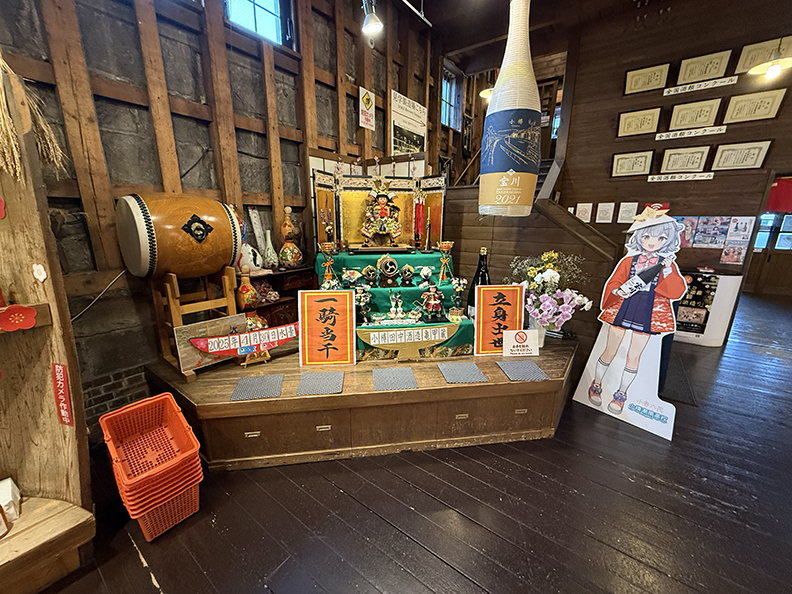
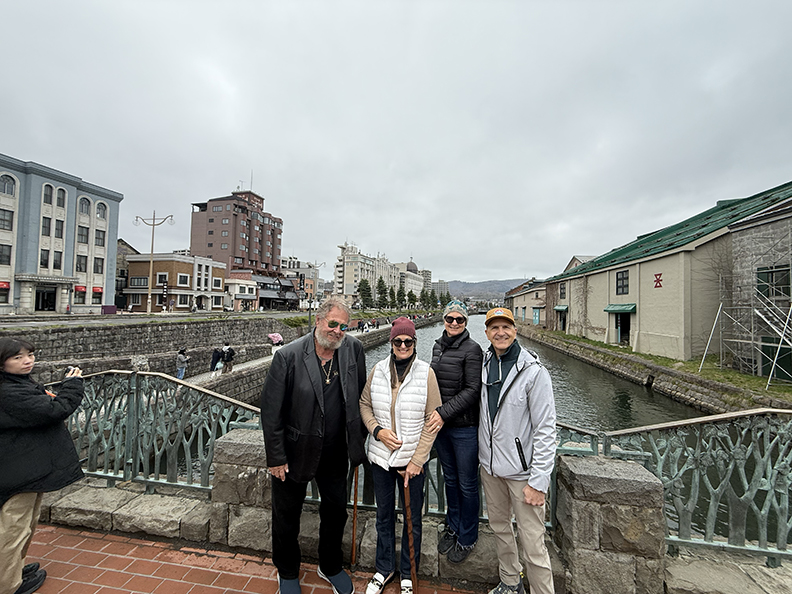
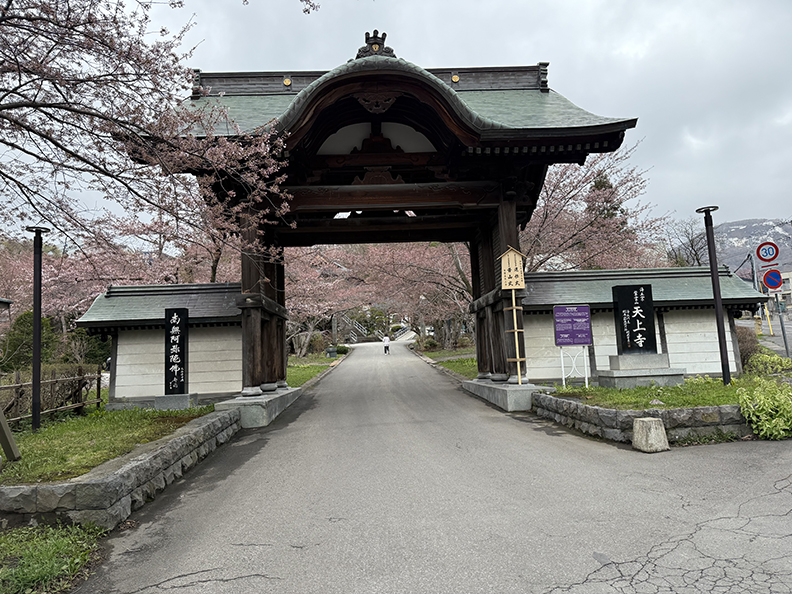
We made a couple of stops and toured the sake factory, seeing how they turned rice into sake, and visited the “Steam Clock,” the music box museum, and a park with cherry trees in bloom, and we took a picture of the canal that runs through town.
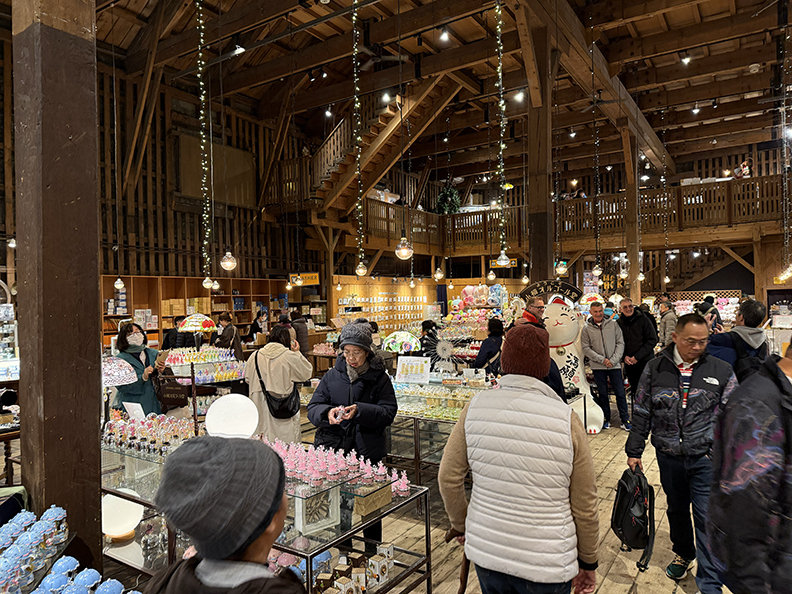
The Otaru Steam Clock, located at the entrance of the Otaru Music Box Museum in Otaru, Japan, is a prominent attraction. Built in 1977, it’s the largest steam clock in the world. Inside we found hundreds of music boxes, each more intricate than the previous.
One fun stop (for all of us but Debbie!) was at the ice cream store. It seems they are very strict about ordering from the picture menu. But they did not offer chocolate sauce on the ice cream Debbie had. They had the chocolate sauce right there, but the combination she wanted was not on the menu. No matter how hard she tried, the woman would not put it on her ice cream. She was adamant! Just like Seinfeld, but instead of “no soup for you,” it was “no chocolate syrup for you.”
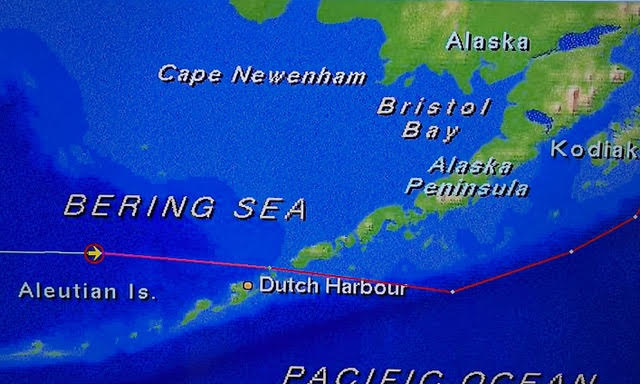
So we loaded back onto the taxi and toured the rest of the town prior to going through customs as we boarded the ship. Next stop, Alaska!
Aboard ship there are 4 gourmet dining rooms that we’d made reservations at when we booked the sailing. That night our restaurant of choice was Jacques, a French-themed restaurant. It was a 7-course meal that took two hours. We started our dinner with the “cheese trolley,” oh yeah, a trolley full of gourmet cheeses, and they served as much as you wanted of any kind, so of course we all had a dinner plate full of cheese. 6 more courses later, we waddled out of the restaurant, and we headed back to our cabins. I don’t think any of us had room for a cocktail that night.
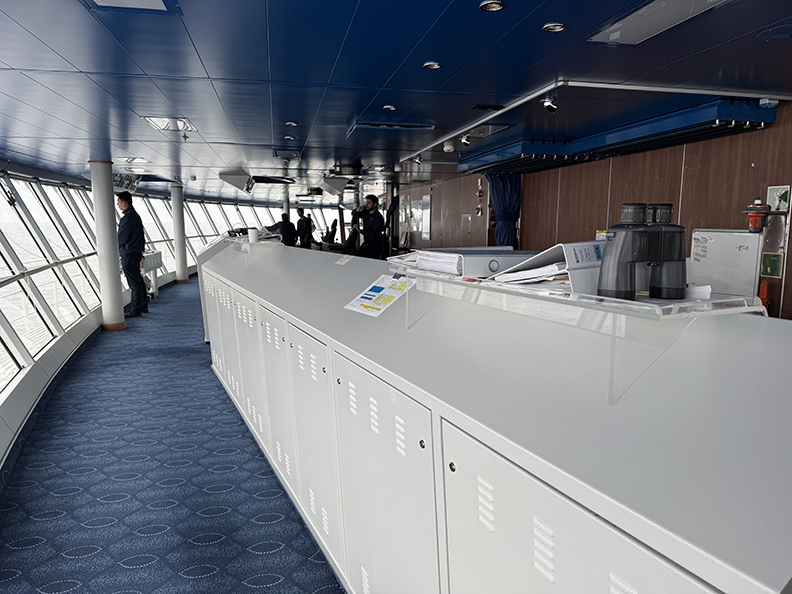
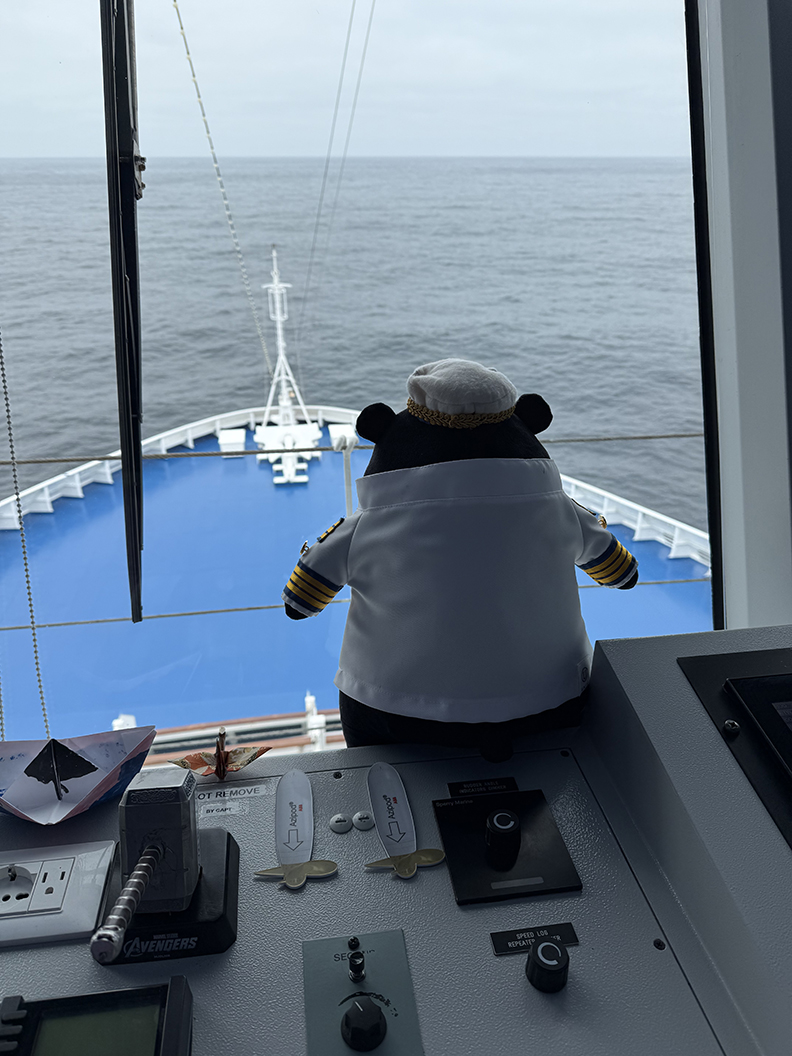
So I figured it would be cool to see the bridge on a 700-foot ship. We were able to set up a bridge tour, which is not offered on this vessel, but since I conned them into thinking I was a big-time writer, they acquiesced. In truth our concierge—yes, I mean our concierge, as our deck had a dedicated concierge—was awesome and arranged the tour. He is a 6’ 180 lb., fit, in-shape, sharply dressed young man who loved the sailing stories, and he made special arrangements with the captain.
And so it was that Jeff, Debbie, Jody, & I were escorted to the bridge.
Now I have to tell you, the bridge on a ship like this is not anything like the bridge on our 68’ sailboat. To begin with, you could have parked my whole boat in the bridge with room to spare!, but it looked more like the bridge of the Starship Enterprise than a boat’s bridge.
Another funny thing was, on my boat the steering wheel was a “destroyer” wheel. Carved from teak, varnished and bright, and about 48 inches in diameter.
On Riviera it was a wheel less than 8 inches in diameter. But most of the time they just steered using autopilot and small levers that would take you port or starboard.
And bow thrusters? How about two up front and one in the aft? They could easily spin the boat in its own length.
When you walked to the far port or starboard, you were standing over the ocean. Docking, you could look straight down through a glass plate in the floor and see exactly how far from the dock you were. Very cool.
The ship has two captains and a deck crew that were professional and very friendly once they found out that we were sailors and had sailed the world. Discussing routes and places they’d been and where we’d sailed to.
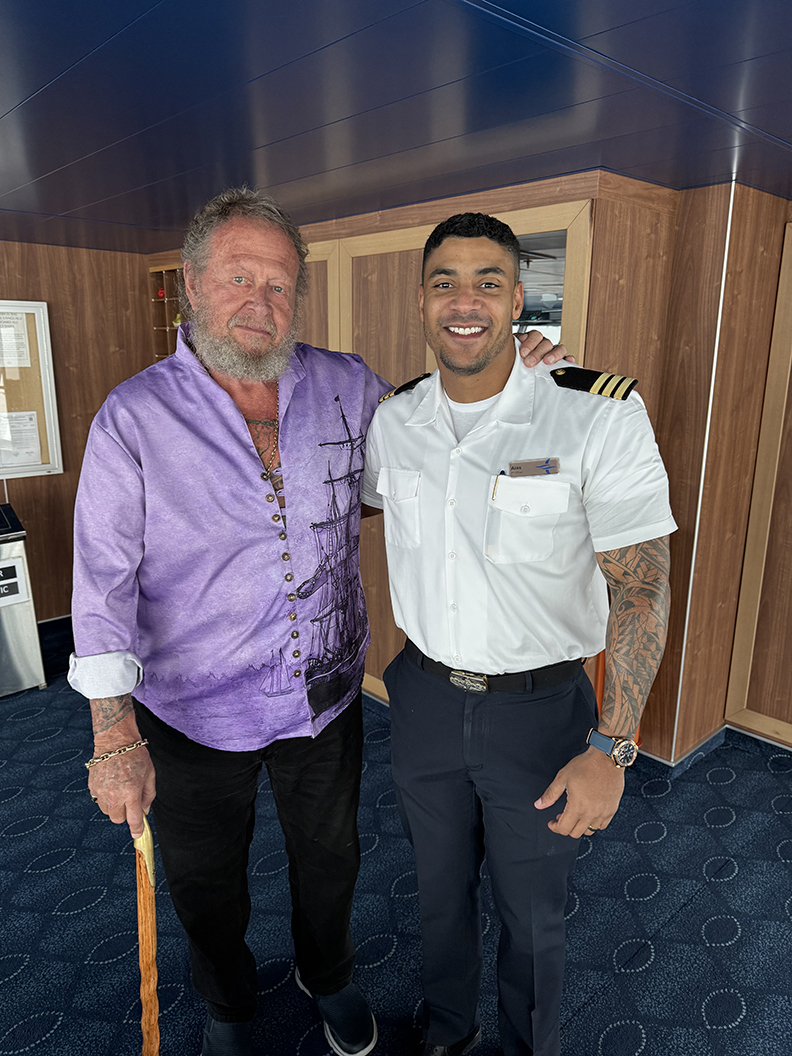
The visit to the bridge lasted about a half hour and was very enlightening. Alex, the first mate and ranking officer on the bridge, made sure we had all the time we wanted and happily answered all our questions. As we headed back to the passenger decks, we felt very secure that the ship was in good hands, and we could relax and enjoy the cruise. (More Next Month!)