

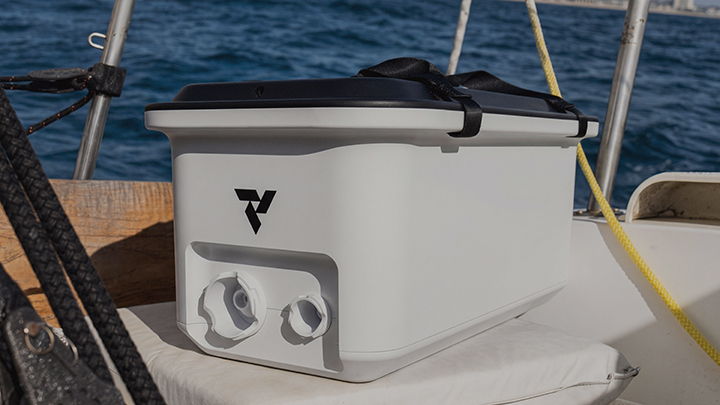
There are a few things you learn pretty quickly when you spend time away from civilization. First, electricity is nice. Second, Wi-Fi is overrated. Third, water is not optional. You can go a surprisingly long time without a hot shower, a refrigerator, or the ability to argue with strangers on the internet. Try going without potable water, though, and suddenly that $749 gadget sitting in the corner looks a whole lot more interesting. That is the idea behind Access, the first-generation portable water filtration system from Vital Lyfe. The company has opened pre-orders for the unit, which is designed to turn water from a variety of natural sources into usable filtered water, including seawater. And that last part gets my attention. Because carrying enough fresh water for a serious off-grid trip, a boat, an emergency situation, or a remote property is one of those logistical problems that gets ugly in a hurry. Water is heavy. Really heavy. A gallon weighs about 8.3 pounds, which means a modest 20-gallon supply is already more than 160 pounds of liquid baggage. Your back does not care how inspirational the survival brochure was. Vital Lyfe’s answer is to stop carrying all that water and start carrying the machine that makes it.
So What Exactly Is Access?
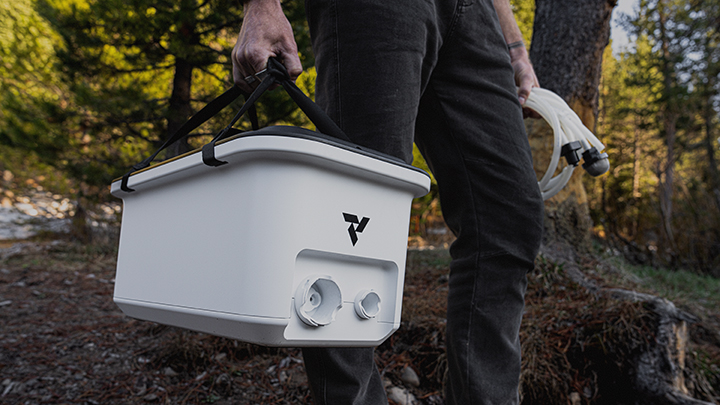
Vital Lyfe describes Access as a portable, push-button water filtration system intended for environments where conventional water infrastructure either doesn’t exist or can’t be trusted. The unit weighs approximately 25 pounds and is designed to operate from both AC and DC power. According to the company, it can produce up to 6 gallons of water per hour from seawater and as much as 13 gallons per hour from freshwater sources. The company also claims a typical salt rejection rate of 99.5% or better. Those numbers make Access particularly interesting for people who spend time around water but don’t necessarily have fresh water available. Think boats, remote cabins, off-grid properties, disaster-response operations, rural locations, expedition camps, and the sort of places where the nearest hardware store isn’t exactly around the corner. It is essentially a small water-treatment plant that somebody decided to put on a diet.
The Seawater Trick
Desalination has been around for a long time. The problem has never been convincing engineers that salt can be removed from water. The problem has been making the process practical, affordable, energy-efficient, and simple enough that the average person doesn’t need an engineering degree and a toolbox full of specialized equipment to operate it. Access is built around automated controls intended to handle much of that work. Vital Lyfe says the system automatically manages pressure, filtration, and energy use in real time. The user experience is supposed to be about as complicated as pressing a button and letting the machine do its thing. That’s important. A piece of equipment can have spectacular specifications and still be a miserable companion if using it requires a laminated flowchart, three valves, two pressure gauges, and somebody named Dave who “knows how these things work.” Access is clearly being designed to avoid that scenario.
SpaceX DNA, Without the Rocket Fuel
Vital Lyfe’s founders, Jonathan Criss and Andrew Harner, previously worked as engineers at SpaceX. They’re applying that engineering background to a problem considerably closer to sea level. The connection is interesting because aerospace engineering tends to be obsessed with efficiency, automation, reliability, and reducing unnecessary complexity. Those are exactly the qualities you want in equipment intended to operate far away from a comfortable infrastructure network. According to Vital Lyfe, Access automates the more demanding parts of the filtration and desalination process, including pressure management and energy management. That could be one of the system’s biggest advantages. When you’re sitting in a workshop with unlimited electricity, clean tools, replacement parts, and a phone full of manuals, complicated equipment isn’t necessarily a problem. When you’re on a boat three days offshore, the generator is having a bad afternoon, and everyone has already used more water than they were supposed to; simplicity becomes a feature bordering on survival equipment.
The Numbers
On paper, Access has a respectable collection of specifications.
Weight: Approximately 25 pounds
Freshwater output: Up to 13 gallons per hour
Seawater output: Up to 6 gallons per hour
Salt rejection: Typically 99.5%+
Power consumption: Approximately 200 watts
Power sources: AC and
DC Runtime: Approximately 1 to 3 hours per charge, depending on water conditions
Pre-order: $8 deposit
Expected retail price: $749
The production rate is particularly interesting. At the company’s stated maximum freshwater rate, you’re looking at roughly 13 gallons in an hour. That’s enough to make a meaningful dent in the water requirements of a small group rather than simply providing a glorified emergency sip. Seawater production is slower, at up to six gallons an hour, but that still means roughly a gallon every ten minutes under the stated conditions. For a boat sitting in an ocean surrounded by an essentially unlimited supply of seawater, that’s a rather compelling proposition.
But Let’s Talk About the Elephant in the Boat
A press announcement is not a field test. That’s worth stating plainly. The performance figures above are Vital Lyfe’s stated specifications, not numbers independently verified in this review. Until Access has been through the unpleasant realities of saltwater, sediment, temperature swings, dirty source water, vibration, long runtimes, clogged filters, questionable power supplies, and somebody forgetting to read the instructions, there are still questions to answer. How long do the filters actually last? What does replacement filtration cost? How does output change as filters accumulate contaminants? How noisy is the unit? How tolerant is it of muddy or heavily contaminated freshwater? What happens when the water isn’t nice, clean seawater but the sort of seawater that has been hanging around a marina? How easy is maintenance? And perhaps most importantly, how much water can the unit produce before someone has to start servicing it? Those are the questions that turn a clever product into a genuinely useful piece of expedition equipment.
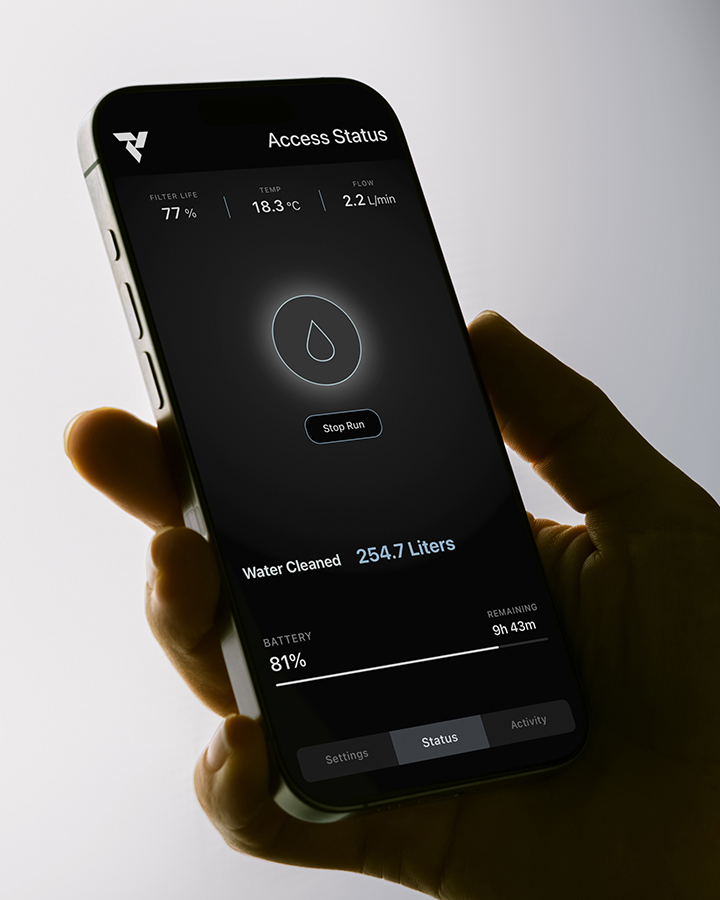 Power: The Other Half of the Equation There’s another detail that anyone considering access for remote use needs to pay attention to: electricity. The system is designed to operate at around 200 watts and can use AC or DC power. That’s encouraging for mobile applications because it gives users several ways to keep the machine running. But portable water generation doesn’t magically eliminate your energy requirements. It shifts them. If you’re aboard a boat, that means considering your battery bank, alternator, solar setup, generator, or shore power. If you’re living off-grid, you’ll want to know exactly how much energy the machine consumes per gallon under the conditions you’re actually operating in. Vital Lyfe gives a runtime range of approximately one to three hours per charge, depending on water conditions. That’s a useful starting point, but serious users will want to think in terms of watt-hours per gallon, not simply hours of operation. Because nobody wakes up in the morning and says, “We have 1.7 hours of battery remaining.” They say, “We need eight gallons of water.” Those are two very different conversations.
Where Access Could Make the Most Sense
The obvious application is maritime use. A 25-pound machine capable of producing fresh water from seawater is an attractive concept for cruisers, offshore sailors, fishing boats, expedition vessels, and anyone who has ever stared at a water tank gauge and suddenly become very interested in everyone else’s shower habits. But the possibilities go well beyond boats.
Off-Grid Living For cabins and remote properties, water can be a constant infrastructure problem. A portable filtration system could provide another option when wells, municipal supplies, or hauled water aren’t available.
Emergency Preparedness: Natural disasters have a nasty habit of reminding people that infrastructure is a convenience, not a law of nature. Water systems can be disrupted by earthquakes, floods, fires, storms, contamination events, or power failures. A portable treatment system could provide an additional layer of resilience, assuming the required power source is also available.
 Rural and Remote Communities The bigger idea behind Access is decentralization. Instead of transporting clean water to people or transporting people to a centralized water source, the technology attempts to bring water-processing capability directly to the user. That is a much bigger proposition than building a better camping filter.
Expeditions: If you’re headed somewhere remote, every pound matters. Carrying a compact machine that can process local water could dramatically change logistics, particularly when the local water source is plentiful but not immediately drinkable.
The $749 Question: At $749 retail, Access isn’t an impulse purchase for most people. But the comparison shouldn’t necessarily be between Access and a $30 filter. A better comparison is between the machine and the infrastructure it’s potentially replacing or supplementing. For someone who occasionally goes camping next to a pristine mountain stream, a $749 water system is probably overkill of the highest order. For someone with a boat, remote property, emergency-preparedness requirements, or a serious appetite for getting far away from civilization, the equation starts looking different. The value proposition gets especially interesting if the machine can reliably produce the advertised volume of water while keeping maintenance and consumable costs reasonable. That’s the part we’ll be watching. Because buying the machine is only the beginning. Filters, membranes, maintenance, batteries, and replacement components determine what a water system actually costs over years of use.
First Impressions on Paper: Access is an interesting product because it isn’t trying to make water filtration slightly more convenient. It’s trying to change where water filtration happens. That distinction matters. Traditional water infrastructure assumes the infrastructure comes to you. Vital Lyfe is betting that, increasingly, people will want the opposite: a compact piece of technology that lets them create usable water wherever the source happens to be. At 25 pounds, Access isn’t something you’re going to toss into a backpack along with a granola bar and a paperback novel. But for boats, vehicles, remote properties, emergency equipment, and expedition gear, 25 pounds isn’t unreasonable. The stated production rate is substantial, the ability to work with seawater is potentially transformative, and automated operation could make the system considerably more approachable than conventional desalination equipment. The real test, however, will be what happens after the brochure gets wet. Give the thing ugly water. Run it for hours. Put it on a boat. Run it from batteries. Let somebody who doesn’t know what a reverse-osmosis membrane is operate it. Then do it again. That’s where the good equipment separates itself from the equipment that merely looks good in a press release.
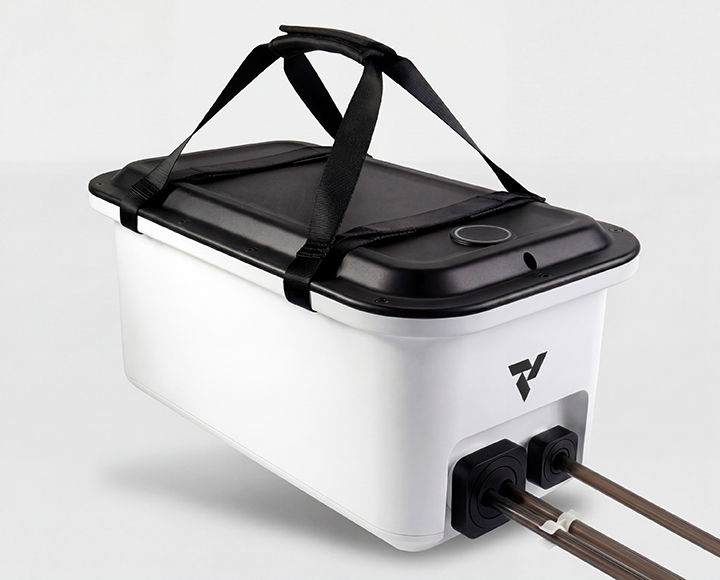 The Bottom Line: Vital Lyfe’s Access is an intriguing attempt to put desalination and water treatment into a package that ordinary people can actually deploy without building a miniature water-treatment plant in their garage. At $749, it isn’t cheap. At 25 pounds, it isn’t featherweight. And until independent real-world testing catches up with the manufacturer’s specifications, there are legitimate questions about long-term operating costs, filter life, durability, and performance in genuinely nasty source water. But the concept is solid. If the system delivers something close to its advertised performance, remains easy to operate, and keeps consumable and maintenance costs under control, Access could become a seriously useful piece of equipment for boaters, off-grid homeowners, emergency planners, rural users, and anybody whose idea of a good time involves getting sufficiently far away that the water company can’t help. And that’s ultimately what makes this little machine interesting. It isn’t selling bottled water. It isn’t asking you to carry a swimming pool on your back. It’s betting that the future of clean water may involve carrying the ability to make it with you. Now we just need to get one dirty, salty, tired, and several hundred miles from the nearest hardware store. Access is currently available for pre-order with an $8 deposit, with a stated retail price of $749 and deliveries expected later this year.