

Gettin’ old sucks!
There, I said it. I suppose I’m allowed to say that now. I’m 82, and I’ve reached the age where I find myself looking backward almost as much as I look forward. Not because I don’t have anything left to do. Hell, I’ve still got a list of things I want to do that would scare the crap out of a younger man. It’s just that every once in a while, something will trigger a memory, and suddenly I’m not 82 anymore. I’m 40. Or 50. Or some other age when my knees worked, my back didn’t complain every time I climbed aboard a boat, and I could drink a couple beers without wondering what the hell they were going to do to me tomorrow.
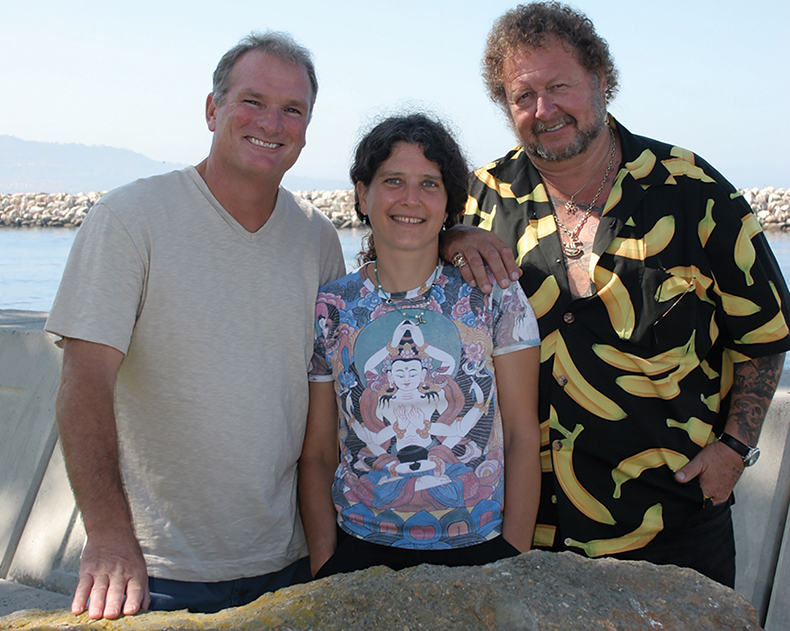
The other day I was going through some old photographs. That’s dangerous territory when you get to be my age. You start out looking for one picture and three hours later you’re sitting in the middle of the living room surrounded by photographs, old magazines, boat brochures, yellowed notes and enough memories to fill a couple lifetimes.
And then I found it.
One photograph.
Just like that, I was back sitting on “A” Dock at Port Royal Marina.
It was after one of our Advanced Cruising Seminars. We’d been spending the day talking about all the stuff you supposedly need to know before going cruising. Weather, navigation, heavy-weather sailing, anchoring, provisioning, getting into and out of foreign ports, and all the other things that seem incredibly important when you’re sitting in a classroom. Then you go cruising and discover that the most important thing you need to know is how to laugh when everything goes wrong.
Sitting there with me were John Kretschmer and Tania Aebi. We had chairs pulled together on the dock, a couple of coldies within easy reach, and that particular look sailors get after a long day of talking about boats. We were swapping stories about fun crossings, bad weather, close calls, getting into tight spots and getting out of even tighter ones. You know, all the things that make cruising such a great lifestyle.
Because that’s the funny thing about sailors. We’ll spend six hours telling somebody how dangerous the ocean is, then spend another six hours figuring out how to get back out there. And usually the worse the story was, the better the story becomes after a couple of beers.
Somewhere in the middle of all that bullshit, the idea came up.
“Why don’t we write a book together?”
Now, I’m not sure whose idea it actually was. At my age, I’ve learned that the details of a story become considerably more flexible with time. But I remember the basic idea. I’d recently read Naked Came the Manatee, the collaborative novel created by a bunch of Florida writers. The concept was pretty damn simple. One author writes a chapter, then hands the story to the next author, who writes another chapter, and so on.
It was a literary relay race, except nobody knew where the baton was going.
I loved the idea. Why couldn’t we do the same thing with cruising? Between the three of us, we’d already written more books and articles about sailing and cruising than most people would want to read. John was an accomplished author and sailor. Tania had sailed around the world alone as a teenager and had become one of the most recognizable young women in sailing. And I’d spent enough time wandering around the world’s oceans to know that if you put three sailors together, sooner or later somebody is going to do something stupid.
Usually me.
So why not write a novel?
We’d make it a round-robin. I’d write a chapter, then Tania would write the next, then John. Then back to me. None of us would know exactly where the other guy was going to take the story. That was part of the fun.
And so we started writing Menage A Trois.
Now, before you get the wrong idea, the title wasn’t entirely accidental. I had a lot of fun writing Tania and John’s characters into a rather complicated romantic relationship. They, on the other hand, seemed to have a remarkable ability to write themselves right back out of it.
I’d put them in a situation that looked like it was getting very interesting, then Tania would get the next chapter and somehow manage to escape. Then John would get his turn and escape again. I began to suspect they were conspiring against me.
But that’s what made it fun. We’d write a chapter, send it off, and wait to see what the other two idiots did with it.
At the time, all three of us were busy sailing all over the world. John was heading toward the Mediterranean. Tania was going to Greece to help us with one of our Share the Sail adventures. Jody and I were doing our own wandering. None of us had a particularly normal schedule.
And, of course, this was before everybody carried the entire world around in their pocket. Today you can be sitting in the middle of nowhere, hundreds of miles from land, and still get an email from somebody wanting to know why you haven’t answered theirs. Back then, communication while cruising required a little more effort.
But the internet was already becoming the great equalizer for sailors. It gave those of us who were stupid enough to try working while cruising a way to actually do it. You could be sailing across an ocean and still write an article. You could be anchored in some obscure little harbor and send a manuscript halfway around the world.
Or, if you were three sailors with questionable judgment, you could try writing a novel together while each of you was wandering around the planet.
And for a while, it worked.
We got through chapter after chapter. I think we made it to about Chapter 12, and I was really beginning to like where the story was going.
Then John disappeared.
Now, when somebody disappears in the cruising world, you don’t immediately assume the worst. You figure he’s probably anchored somewhere with no internet. Or he’s offshore. Or he’s in some little harbor where the Wi-Fi password is written on a napkin behind the bar. Or he’s simply decided that whatever he’s doing is more interesting than whatever you’re doing.
As it turned out, John had a pretty good excuse.
He’d snuck off across the Atlantic with Tadji.
On their honeymoon.
Yep. They’d gotten married and then apparently decided that the appropriate way to celebrate was to disappear across an ocean.
I can’t say I blame them.
That’s one of the great things about cruising. You can make plans all you want. The ocean doesn’t give a damn. And neither does a good sailor.
You can say you’re going to be in Gibraltar on the fifteenth, Greece on the twentieth and Turkey by the end of the month. Then the wind changes. Or you find a harbor you like. Or somebody hands you a cold beer. Or you meet somebody interesting.
Suddenly your carefully planned itinerary is sitting in the bottom of your navigation bag while you’re wondering where the hell the next week went.
The problem was that John was supposed to write Chapter 13.
And John wasn’t there.
So we waited.
And waited.
And waited.
Eventually the time between chapters became longer. Then longer still. Life got in the way. Boats got in the way. Passages got in the way. Writing other books got in the way. And, of course, there was that terrible disease that affects sailors everywhere:
Having too much fun.
Eventually Menage A Trois disappeared.
Not really.
It’s still there.
We’ve all still got those twelve chapters. They’re sitting somewhere in computers, files, old emails, hard drives or whatever passes for permanent storage these days. The story never really died. It just went cruising.
And like a lot of cruising stories, it never quite made it back.
Every once in a while I think about those twelve chapters. I wonder what the hell happened to the characters. I wonder where we were going to take them. I wonder what Chapter 13 would have looked like. And I wonder what John would have done to get those two characters out of whatever mess I’d gotten them into.
Maybe someday we’ll find out.
Maybe John, Tania and I will all get together again, dig out the old files and finish the damn thing. Of course, by then we’ll probably have to have somebody read it to us. And somebody else will have to explain how the computer works.
But that’s the strange thing about getting old. You don’t really forget the important stuff. You forget where you put your keys. You forget why you walked into the room. You forget somebody’s name five seconds after they tell you what it is.
But give me a photograph, a smell, an old song, or a picture of a boat sitting at anchor somewhere, and suddenly I’m right back there. I can hear the wind. I can smell the salt. I can feel the dock underneath my feet. And I can hear three sailors sitting around drinking coldies and dreaming up something that probably made absolutely no sense to anybody else.
Those are the days you don’t realize are important when you’re living them. You think you’re just sitting on a dock. You think you’re just talking. You think you’ve got all the time in the world.
Then one day you find an old photograph and realize that was the good stuff.
Those were the days.
And maybe that’s what getting old really is. It’s not so much looking backward. It’s realizing how many of the ordinary moments turned out to be extraordinary.
So here I am, 82 years old, looking at a photograph of three sailors who thought they had plenty of time to finish a book.
We never did.
Maybe we will.
Maybe we won’t.
But I’ve still got the twelve chapters.
And if we ever do finish it, I’ll let you know.
Assuming, of course, I can remember where I put the damn manuscript.
What’s the worst that could happen?