

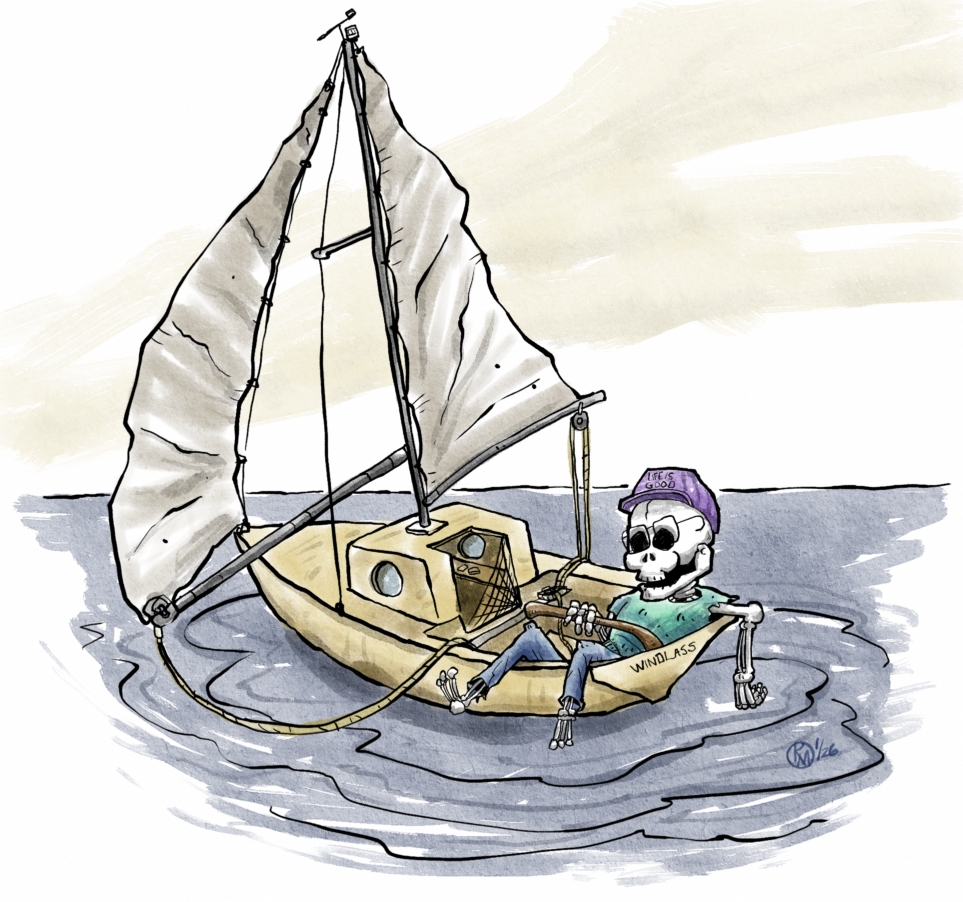
Whether you’re racing or cruising most of us go sailing for the peace and joy it brings using just the wind to power us along. Unless your passage making modifying your plans and shortening your expected goal for a light airs day makes good sense. It’s all about savouring the conditions just as you might linger over the last bite of a tasty ice cream, or last sip of a fine glass of wine.
Several factors need to be taken into consideration on a light wind morning are usually dominated by the wind off the land, but later the sea breeze will build if hot sun is expected. Therefore, possible a very early start would allow use of the land breeze, followed by often quite a short lull before the wind reverses and begins to move again onshore.
Any passage undertaken needs therefore to take this change into account; it might be a good plan to have a late breakfast or an early lunch whilst these conditions are changing. Making sure that you’re chosen destination doesn’t ever take you more than a mile or so, away from the land. Sailing in tidal areas means that having fair tide is essential, on a day when boat speed is likely to be low.
Sails need to set up loose with plenty of slack on halyards; outhaul and kicking strap tension to create sails with bigger draught. Crew weight needs to be asked to sit to leeward to heel the boat and help sails to fill.
Any movement around the boat by the crew must be slow and measured. Light air sails such as spinnakers whether conventional, isometric or cruising chutes, are hugely helpful downwind but can also be used on beam reaches with careful trimming. Consistent concentration by helmsman and trimmers is necessary to keep any way on the boat.
Once lost it’s very hard to regain! Tacks must be slow and smooth backing the jib helps the boat turn through the wind. Any holes in the wind must be avoided by looking well ahead, even sailing slightly off course when necessary. The wonderful feelings of accomplishment that follow any short passage undertaken like this are hard to beat.
If you are racing on a day like this provided its short round the cans. Then in tidal areas it’s mainly about understanding them. Shallow water can become your friend provided you don’t run aground or hit a rock. And realising that you’ll need to spot any course shortening. Rather strangely we began to win races with an old Classic yacht in the Clyde or on West Highland week. Perhaps because I had more patience; coupled with some excellent crews.
My long-distance Ocean crossing small yachts; have had no engine; which can be frustrating many times; but it does make awareness of using any wind, tide or current well. Plus having plenty of sail power with a full wardrobe for light-weight stuff.
I suggest you don’t just put on your iron topsail (engine) like everyone else who’s out there. Let them moan about the lack of wind and just enjoy a laidback gentle day.
Cruising well is all about dealing with the here and now, coming to terms and enjoying what you’ve been gifted each day. On a light air trip, the play of light on the sea, perhaps some sun, adjusting a sail that needs trimming and being able to hear the tiny ripples of the wake as the boat gilds along. Some of these factors are the reason many of us go cruising in the first place.
Racing is different it’s about concentrating, having some luck and using your imagination or senses where you think you might find some wind. And if you’re long-distance sailing there’s always things to fix on any tiny boat; and one day means nothing then.
Slowing down from our modern world can be tough but you must learn how to enjoy it. It’s just mother nature after all…