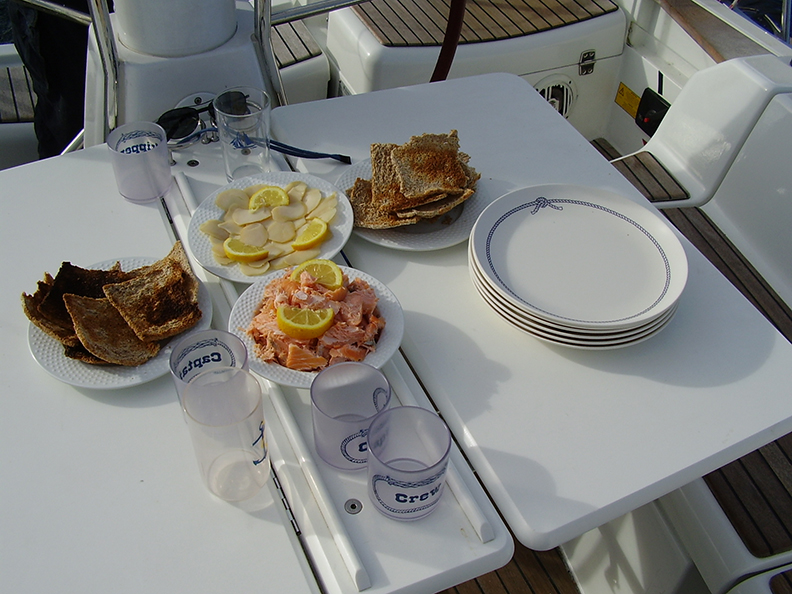

One subject for any professional sailor best to avoid is writing about boat food. Knowing that most guys in my game; will eat almost anything.
Some years ago, we spent long periods of time looking for large Cabbages when ashore in the inner or Outer Hebrides. Considering how beautiful these islands are, it was a strange thing to do. Johnny McKercher insisted at for the end of our Hebridean trips, this was necessary…
Victualing on any small boat can be interesting. Particularly on charter, sailing school or big yachts. During years of coaching I realised that you can never get it completely right. Provided that the school or charter company is told if some of the customers are vegetarian or vegan. If they’re any good, they’ll try their best to have your provisions on-board.
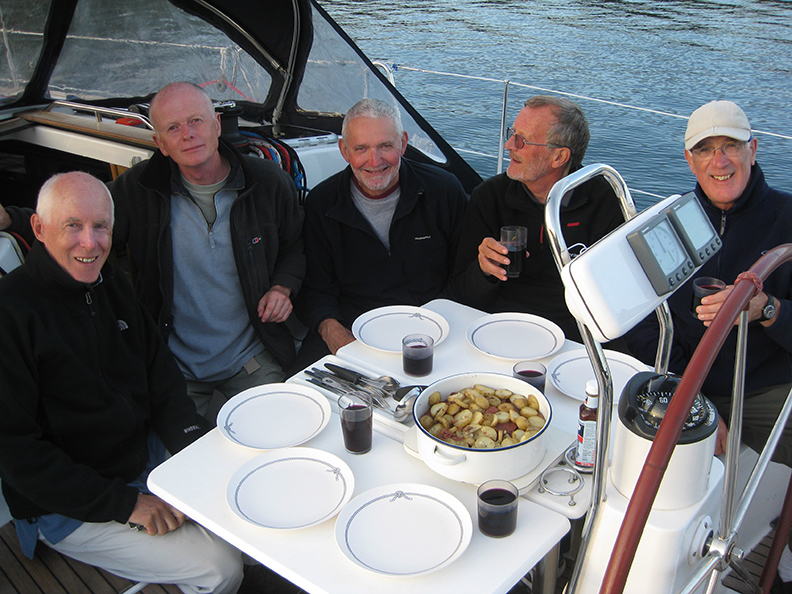
One group of people (Bumbling Geriatrics!) that sailed with me for many years. During annual ten days trips on the west coast of Scotland were brilliant. What made them so special? Well, they all were mature worldly people. Knowing enough to think and understand just what might work for everyone was by being unselfish.
If there was a fine restaurant or pub ashore with great Scottish seafood; or we fancied something else food wise rather than what was on the boat, we’d eat ashore. Using a secluded anchorage maybe after a long passage; planned good meals (plus good beverage) would have been all accounted for well beforehand.
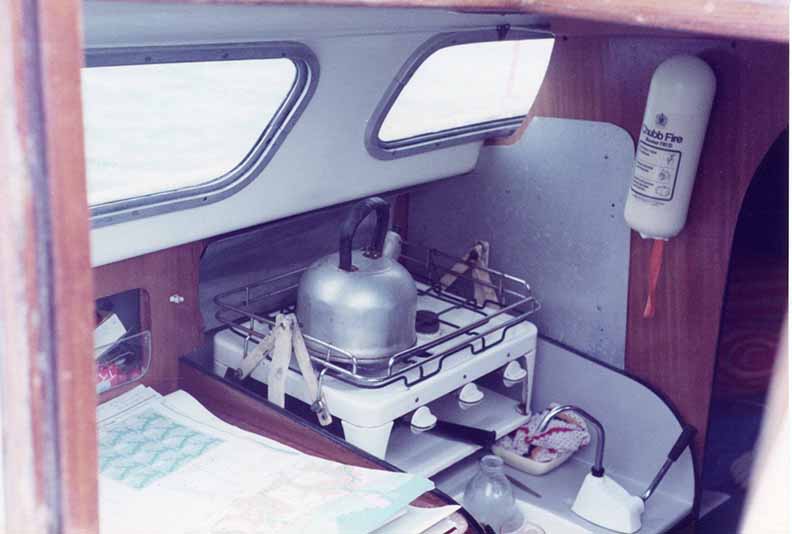
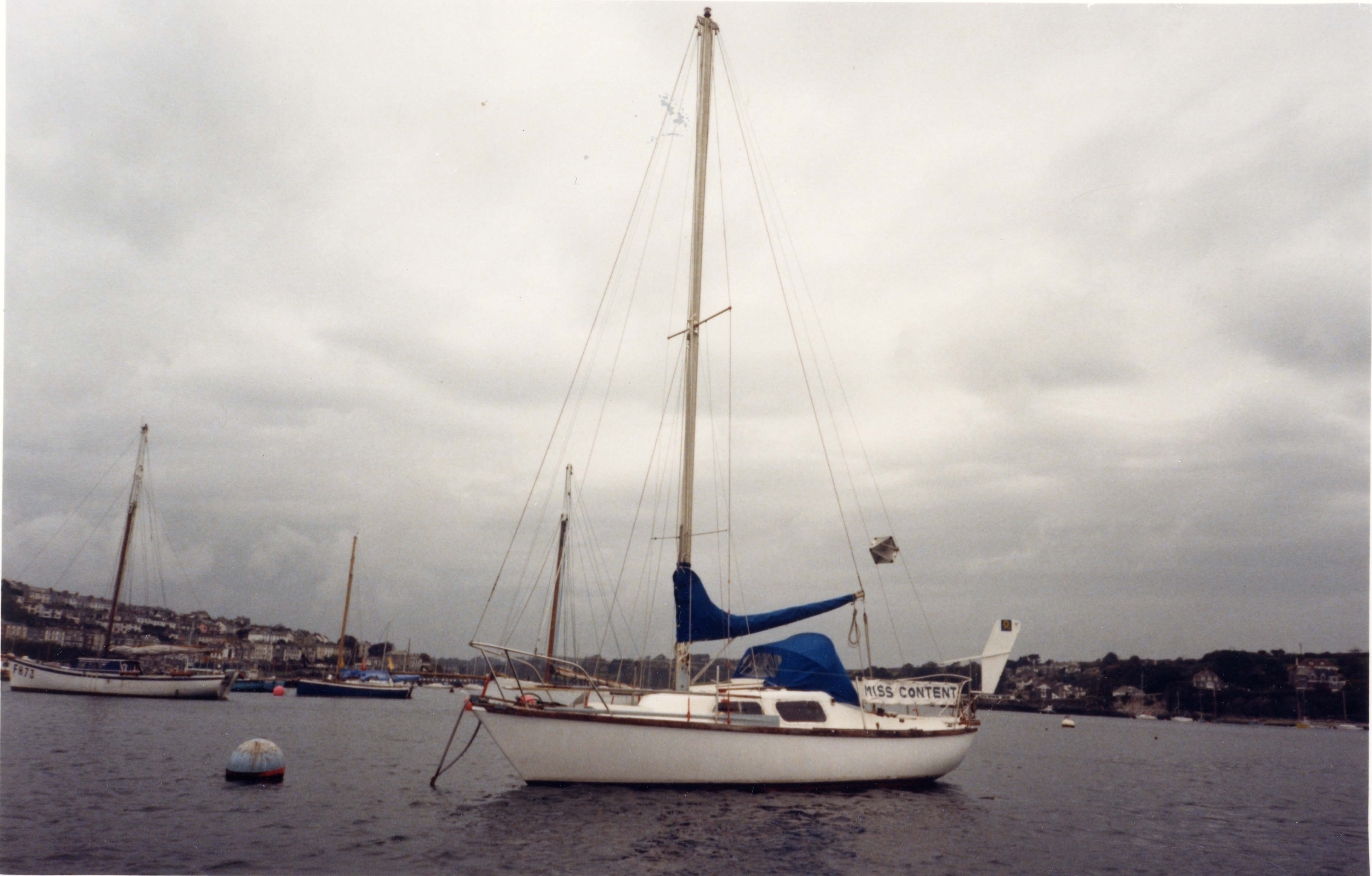
Food was important just to survive when sailing on my own tiny boat when crossing the Atlantic three times. Many passages could take more than a month. Having no engine; and hence no refrigeration any victuals had to be thought out carefully. Weight and volume were important with a seventeen-foot waterline. MY boot topping giving a good guide in not overloading the boat; plus, enough Paraffin to cook well.
Experience teaches how long fruits, veg. and proteins keep at sea. Dried spices help make good flavours taste better, especially when you’re using tinned meat or fish. Rice, pasta, lentils, cous-cous etc. keep forever if they’re dry.
Capt. Cook was right about Limes; they do keep a very long time. Potatoes apart from sweet one’s don’t keep well. The freshest protein you’ll eat is by catching a fish, usually a Tuna or Dorado. Flying fish that land aboard during the night make a good snack for breakfast when using ‘trade winds. Bread becomes very important. Take flour; I managed to make fresh bread (in my pressure cooker; like a Dutch oven); after long-life loaves ran out using dried yeast. The pressure cooker, or any large pot is a must. It saves on fuel hence energy.
Plenty of fresh in a large Eski can last for a week (depending on local temps.). The cabin and lockers full of fruit, veg, etc. have some hanging in cabin nets. (finding that large whole balls of Edam cheese [though v. cheap] can hurt you hitting on the bonce) …once she’s rolling around!
Knowing what you’ve stowed in each locker; be sure to tick off once it’s gone!
Ocean racing poses similar problems on larger 60 to 80 ft boats: weight, fuel and storage. Including that lovely, freeze-dried stuff; when ‘the cook of the day’ would have to tell you what you’re eating. Having aboard a few bottles of Tabasco, Worcester sauce or larger like Lime pickle, can improve it! Even though all up weight is at a premium. Fitness and body tone must be regained after each leg on any ocean passage.
Returning to ‘cabbages and kings’; John’s brilliant Lobscouse evolved each year for our BG group. This meal is normally a slow cooked, layered dish using either lamb or beef, onions potatoes, cabbage or whatever veg etc. you’ve left. Eventually we persuaded him; it might be improved with a good splash of white or red wine!
There’s still some debate today about what the actual recipe was for Lobscouse during ‘the days of sail’. Possibly just Salt Beef (or Pork), Onions, Pepper and ground Hard Tack (Ship’s Biscuit) made into a gruel.
Johnny McK. knew we needed to use up tins of Corned Beef, peas etc. on last days. He didn’t become a self-made man; employing large numbers in Scotland; without having, something inside his head…