

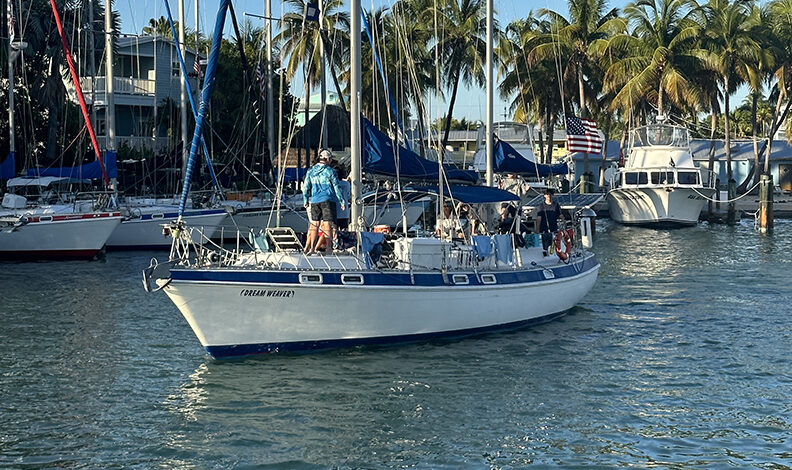
Every boat has a moment. The watch change that runs late, the fender nobody tied properly, the crewmate who narrates every wave. Whether it’s a shared sail, a dock full of Scouts, or close friends who suddenly discover they have very different ideas about “a quick anchorage,” tight quarters test everyone. Sometimes you wish a crewmate would fall overboard. (Kidding. Mostly.)
The good news is that a calmer crew is built with small habits, and yoga makes them easier.
The Four-Minute Sit
Once a day, preferably before anyone has opinions, the whole crew sits together and breathes. Cockpit, foredeck, or hatch cover all work. Eyes closed, slow breaths through the nose, no talking. Four minutes is plenty.
Something shifts around minute two. Breathing slows, shoulders drop, and the person who was getting on your nerves becomes a person again. Nothing gets solved, and that’s fine, because you stop needing it solved quite so urgently.
I used to meditate each morning on deck, and out of respect, my crews would remain silent doing their own form of meditation. I know this changed how the day went.
The One-Breath Rule
When tension rises, and aboard it will, everyone takes one slow breath before responding. Just one. It buys the half second between a snippy comeback and something useful. Crews that agree on this rule ahead of time, calmly and in daylight, are far more likely to use it when it counts.
When There’s No Time to Breathe
Docking. Picking up a mooring. Anchoring in a building breeze with current pushing the wrong way. This is where voices get raised (let’s call it “enthusiastic communication”), and nobody has time for a calming breath with a boat hook in one hand and a piling closing in.
So don’t try to breathe during. Breathe before and after.
Before: Brief and Assign. Well before you enter the channel, gather the crew and walk through the plan. Who’s on the bow line, who’s on the stern, who’s fending off, who’s watching the depth. Name the wind and the current out loud so nobody is surprised by them. Then take one slow breath together. Everyone knows their job, and a crew that knows its job has far less to shout about.
During: Silence and Focus. Once you’re in the channel, the talking stops. Every set of eyes goes to the task. Quiet is a tool here, because the fewer voices competing, the clearer the one that matters. It’s remarkable how much calmer a boat feels when nobody is narrating.
After: Celebrate. Once the lines are secure, stop and acknowledge what just happened. High fives, handshakes, a loud “nice work, team.” This isn’t fluff. Your nervous system just went through a small storm, and it needs a signal that it’s over and you did it well. A crew that celebrates together resets together, and walks into the next docking with confidence rather than dread.
I used this routine with Boy Scout crews every time we came in or set the anchor, briefing before the channel, silence once we were in it, and high fives on the dock. It worked in wind and current alike, and dockhands kept telling me I was a great docker. (I never felt like one. Turns out a prepared crew makes the captain look good.)
Reset at the Watch Change
The handoff is where moods get passed along with the helm. Try thirty seconds of shared stretching before the next watch takes over: roll the shoulders, open the chest, release the neck, and look at the horizon rather than the instruments. The incoming watch starts fresh, and the outgoing watch gets to let go of the last four hours.
Make Room for Quiet
Small spaces need protected silence. Agree on a window each day when nobody expects conversation, such as the first hour of morning or the last light of evening. Quiet isn’t rudeness aboard, it’s maintenance.
Keep It Real-World
No mat, no studio, no flat water required. In tropical heat, keep movement gentle and stay in the shade. The goal is calming the nervous system, not working up a sweat. If you can sit, you can do all of this.
Why It Works
Slow breathing tells the body it’s safe, and a body that feels safe is less likely to snap at a coiled line. Shared breathing and shared celebration add something else: they quietly remind everyone aboard that they’re on the same side, and that’s a lot of what a crew is.
Try it on your next passage. Brief before, focus during, celebrate after, and see who surprises you.
Fair winds, and be kind to your crew.
P.S. To pre-order your copy of Yoga Onboard at a reduced price (in design phase), visit here
https://khyhealthwellness.