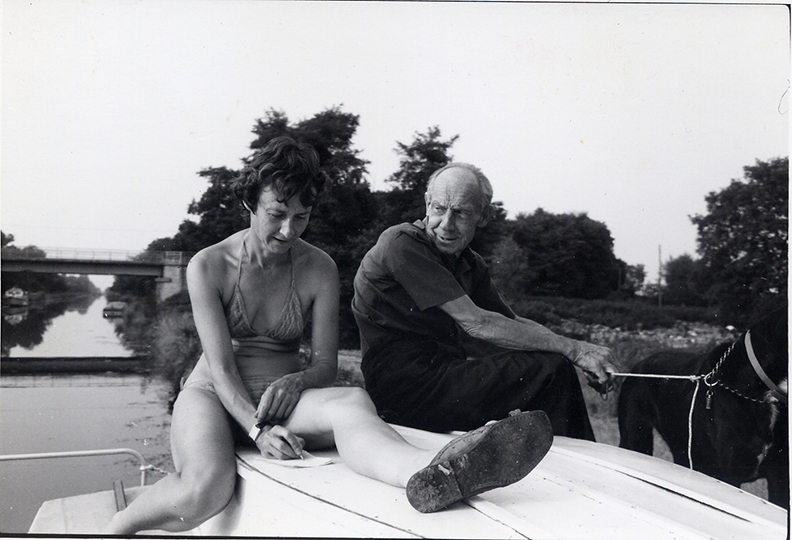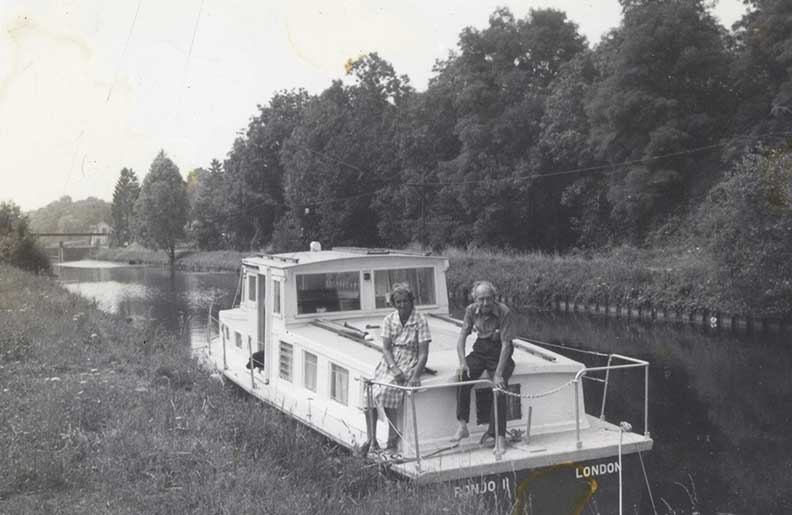

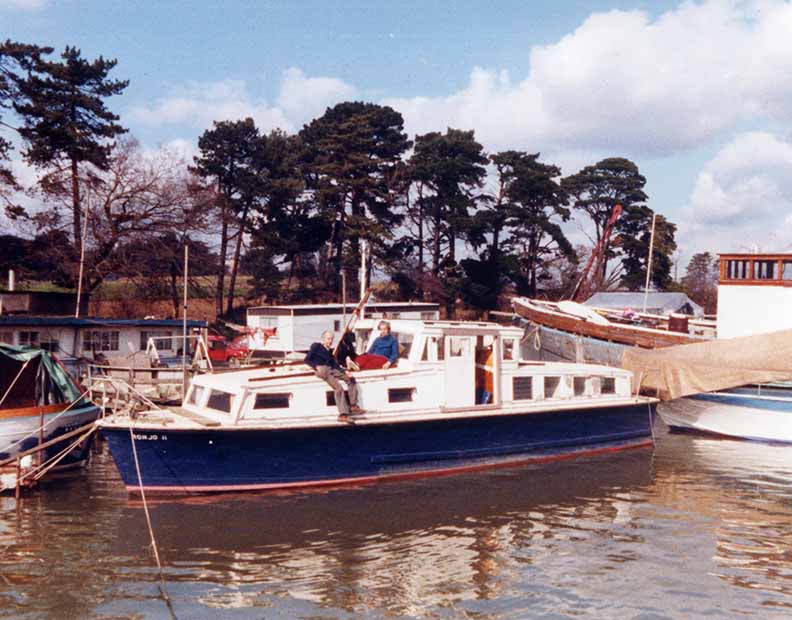
Quite a good few years ago my mother and father bought an old, converted Ex. WW2 wooden Air/Sea Rescue craft called ’Ronjo II’. Having owned some lovely sailing yachts over the years, both weren’t getting any younger Hence, a motor cruiser seemed a great idea. It would be a restoration project, which was not unusual, being the way only way my parents could afford the majority of their boats. About 40ft long, she was a long thin hard chine vessel, planked up double diagonally. Fitted with one 40HP Diesel engine, rather than the big twin petrol engines she would have had, for her fast-planning wartime role. I remember that T.E. Lawrence (i.e. ‘Lawrence of Arabia’) had been involved with the development of craft like these, between the wars, when serving in the RAF incognito as an airman.
‘Ronjo II’ was berthed at Richmond on Thames, while they lived in Winchester. She needed to be moved closer for Dad to do the refurbishment work. He asked me if I would give him a hand and take her round to the South Coast. We set a date for a week in July. He spent some time readying the boat for the proposed trip. Checking as best he could that the engine worked reasonably well. Then stocking up on gas, diesel & oil, water, buying the charts, tide tables etc that we needed. Even building a small pram dinghy as a lifeboat! While my mother looked after the domestic side putting on cooking utensils, buying food, drying mattresses etc.
Having seen ‘Ronjo II’ before they bought her, I realised she was rather ripe! Meaning that in any normal seamanship terms probably full of rot! Being used in the upper part of the Thames River in fresh water wouldn’t help either as Salt seawater tends to preserve all wooden boats. I thought that although having built very quickly in WW11 with double-diagonal planking. This is notably extremely strong, which she would have needed for her wartime high-speed role!
Being lucky weather wise was needed to get her there. We drove to the boat on Friday evening after I’d finished work. Saturday dawned bright with light winds and we left early, ‘locking out’ onto the tidal part of the Thames, catching as much ebb as we could. Travelling under the multitude of bridges that span the river in London, through the Pool of London and round the U-bend of the Isle of Dogs. The great docks were closed, and this seemed sad, compared to how I’d seen them as a boy, when this was a busy port.
The river was cleaner now though, without all the commercial traffic, having a few tourist boats using it. The old warehouses lining the river were slowly being converted to expensive high-rise flats and town houses, changing the character of the East End. On the south bank we passed the beautiful old buildings of the Royal Naval College at Greenwich. Just the small Tilbury docks were left farther down. With the tide under us we made good progress, punching the flood after Holehaven and turning into the River Medway to moor at Queenborough. Not bad progress on the first day. Ronjo II was only able to make 6/7 knots with her current small engine.
Starting early the next morning, we waited for the Kingsferry Bridge to lift passing an old sailing barge coming the opposite way. Using the height of tide going through the shallow part of the West Swale then out through eastern part inside the Isle of Sheppey. Then back out into Thames again, now a wide estuary. Trundling down the north Kent coast we passed Whitstable, Herne Bay and Margate, finally reaching Ramsgate after another longish day.
The forecast F4 occ.5 southeasterly sounded marginal, to round the South Foreland into the Channel, on day three. But we decided to chance it. Departing Ramsgate, ‘Ronjo II’ having not had her topsides wet for many years in the upper part of the Thames, began to leak, as she rolled in the slight sea.
Dad had fitted a couple of electric bilge pumps to deal with this circumstance, but the muck in the bilges, soon blocked them both. Whilst steering, I worked on a hand bilge pump in the wheelhouse, while he spent the time below decks in the bilges unblocking them. Even with them working properly and my pumping, we were still taking in water faster than clearing it!
Communication between us wasn’t easy, shouting above the noise of the engine. But we realised as we closed the South Foreland, the waves would increase, more than the metre, they were at present. Dad joined me from below, smelling rather unsavoury, coated in diesel and other stuff from the bilges. We needed to plan, whether to press on, or not!
Turning back for Ramsgate, with wind behind us on the starboard quarter, the boat wouldn’t be punching into the waves and ought to make less water. It might take time with the tide against us. We also knew our safety kit wasn’t very good. No VHF radio just two lifejackets, a pack of mini-flares and Dad’s homemade pram dinghy! The dinghy wouldn’t have a great deal of freeboard, with two of us aboard. This was 1981 and certainly we hadn’t given much emphasis towards safety during our planning. Undoubtedly this wouldn’t happen today, everyone is more aware of safety. A stale smell of diesel etc. from the bilges wasn’t pleasant, but luckily neither of us felt seasick.
Dad explained to me, how badly we were leaking. Could we press on, with me yelling down to him our progress rounding the Foreland? While he judged the rising level of rolling water before it stopped the engine? Would the bilge water reach his newly fitted the batteries and stop the electric pumps. Under an hour more motoring south was needed. Then we’d have the wind and tide with us giving us smoother water!
Luckily the batteries were fitted high enough not be affected by the water. Dad had also brought along a sheet of soft metal gauze, which he had planned to cut to size then to wire onto the end of each of our three bilge pump pipes. Acting as filters. We decided to fit these, then bite the bullet and see if we could round the South Foreland.
Holding Ronjo II’s stern towards the wind and just maintaining steerage way, I waited anxiously until Dad yelled, he’d finished making filters for the pumps. They’d be less likely to block. Then turned south, trying to find the right angle and speed. Judging where the old girl wouldn’t drive into the waves hard or roll badly. We had already decided not to close the land anymore until we’d passed the headland being, perhaps a couple of miles offshore. The sea would be worse inshore.
It seemed a very long half hour on deck and must have been very unpleasant below for Dad. Watching the ever-rising filthy bilge water, slowly blacken all the accommodation. His voice sounded slightly more concerned each time, I yelled down relaying our progress. Neither of us knowing if we’d do it. The boat felt sluggish now, with the quantity of water onboard. It was a bit ‘nip and tuck’, but finally we rounded the South Foreland! Then we limped down the coast into Dover Harbour for shelter, quite quickly, wind and tide helping give smoother ride. Even now, this little four-hour passage remains firmly etched into my mind!
Only after anchoring in calmer water were, we able to empty ‘Ronjo II’ out. This took a good hour or two! We decided that was enough for one day! Not fancying rolling all night in the Outer Harbour, still leaking, we joined the queue of boats waiting to lock into the Inner Harbour. Going ashore afterwards to have a few jars of ‘Dutch courage’, and to lick our wounds. It had been a very close call, but we’d got away with it.
The rest of our trip passed with without too much more drama. Longish day sails with the same high-pressure system sustaining via Rye, Brighton and Chichester. We dried out in Rye, and I did a tiny scan of Ronjo’s bottom with my knife whilst dad slept; and it wasn’t too bright. Later between Brighton and Chichester when roughly a mile off the land. We saw three folks lost in the land fog in a small rowing boat with a small OBM (an outboard motor!). Two men and a young boy who looked very cold and frightened. They’d set off from Shoreham from the beach in good sunny weather to go fishing in the Channel, but a land fog had rolled in; having no compass.
They didn’t know where to go to find the land now. I very carefully pointed out where north was when using the tiny breeze from the land. Because of not wanting us to lose us ebb tide time. We weren’t using a compass either (it hadn’t yet been fitted properly). But were using our Echo-Sounder and this tiny breeze for direction. I said to them “we could and would escort them into the beach, if they weren’t happy about this; only using the wind for direction”. After looking at our sounder, “I said it would take them about 10-15 minutes”. After we a wee discussion, they were happy to do this; and we trundled back on our way. This probably reflects just how casual people, where back in the 80’s about their risk taking with life’s with the sea!
With thicker fog when rounding Selsey Bill, having to feel our way through the Looe Channel, and into Chichester. Dad very quickly mounted our steering compass which we hadn’t really needed before. We both felt more relaxed after reaching much more sheltered water in the Solent. Ending the trip up right at the top of the River Hamble at Bursledon.
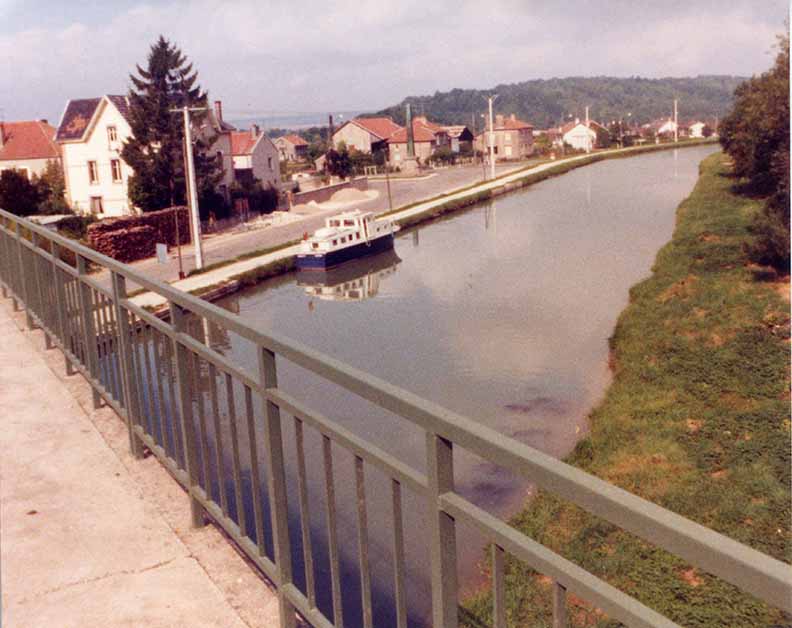
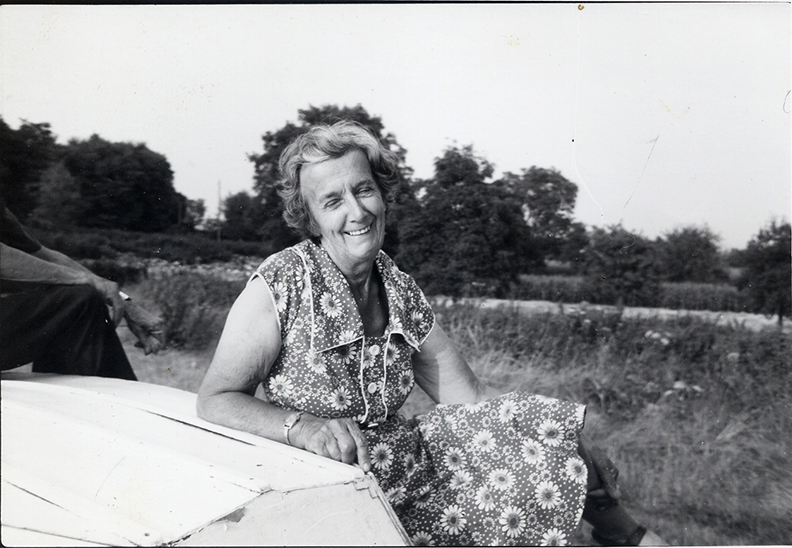
Once there, my father spent two years refitting this old lady. We (dad and I) eventually took her across the Channel between Dover and Calais in ’83. Where my mother joined. They both enjoyed using the French canals all the way to Strasbourg; which was where my sister lived at that time.
This trip highlighted to me, a need for good safety equipment VHF, life raft etc. If taking any boat offshore. Or having some patience to choose the right conditions with an unsound boat (That week both weather, and sea state improved daily, as the high pressure built). Plus, a realisation that it’s better not to go against the tide in powerboats (especially if they’re very quick) and use flat water, rather than have wind against tide with a nasty sea!
For me nowadays there the much more worrying trend in UK about taking any risks with any out-door activities. My country has turned into a Nanny State driven by our lousy governments. And it doesn’t make any sense especially for British children either. If you don’t learn to risk assess when younger; whilst participating in anything slightly dangerous without your parents. Then you will come to grief very easily; which can be seen now with sea and river drownings etc.