
In some ways, it hardly seems possible that forty years have passed since I wrote Brotherhood. In other ways, it seems like a completely different lifetime. Sometimes, if I’m being honest, I think it was a much easier lifetime. Not necessarily safer, and certainly not more civilized, but easier in the ways that really mattered. Back then, a man could throw a leg over a motorcycle, point it toward the horizon, and have a pretty good idea that whatever happened along the way, he’d find a few friends waiting somewhere down the road.
Of course, there were plenty of times when the road led straight into trouble. Hell, sometimes trouble was the whole damn reason for taking the road in the first place. But there was something about those days that made the whole experience different. We weren’t trying to build a brand, collect followers, or make sure somebody got a good picture of us doing something outrageous. We were out there because we wanted to be. The bikes, the bars, the long rides, the characters we met, and the occasional scrape with the law were all part of the deal.
The text of this book remains unchanged from the original. You’ll run across some slang that might sound a little strange today, assuming you’ve been spending the last few decades living in a monastery or working for a bank. Some of the expressions have fallen out of fashion, and some of the attitudes might make a few modern folks uncomfortable. That’s fine with me. This isn’t a history book written by somebody who came along later and decided to explain what we were thinking. It’s a story from the time when we were living it, and I reckon that’s worth preserving, warts, bad grammar, questionable decisions, and all.
In the days of the Biker, there was a camaraderie and a freedom that many of today’s riders simply can’t grasp. That’s not meant as an insult to modern bikers. There are plenty of good people riding motorcycles today, and some of them understand the old spirit better than others. But the world has changed, and the particular kind of brotherhood we knew has largely disappeared. You can’t recreate it by buying the right motorcycle, wearing the right leather, or showing up at the right rally. You can’t order it off a menu, and you sure as hell can’t buy it with a credit card.
It was something that grew out of the times, the people, and the way we lived. You learned to depend on the people around you because sometimes you had no other choice. If your bike broke down in the middle of nowhere, somebody might stop to help. If you rolled into an unfamiliar town and things went sideways, you looked for another biker. If you found yourself in a jam, you discovered pretty quickly who was a friend and who was just another guy wearing a leather jacket.
Back then, a man’s word still meant something in a lot of those circles. Not everybody lived up to it, naturally. Hell, bikers are people, and people have been screwing each other over since somebody first figured out how to trade a goat for a sack of grain. But among the real ones, there was an understanding. You didn’t need a membership card or a committee meeting to explain it. You either understood the code or you didn’t.
I remember when you could go to Sturgis and sit on the lawn in front of the Armory, watching the bikes roll in. Maybe fifteen hundred bikers would show up from all over the country, and you knew a good number of them. More importantly, they knew you. You’d recognize an old friend coming down the street, and before long somebody would be dragging over another chair, handing you a beer, and asking where the hell you’d been for the last six months.
It wasn’t just about the motorcycles. It was about the people attached to them. The machines were our common language, but the friendships were what kept us coming back. You could meet a guy who lived a thousand miles away, spend an evening talking with him, and know that if you ever rolled into his hometown, you’d have a place to park the bike and probably a place to sleep. Maybe even somebody willing to help you explain to his wife why you were bringing home another stray biker.
I remember the early days of the Run to the Sun, back when the ride to Daytona was still something that felt like a gathering of the tribe rather than a migration of an entire species. Eight or nine hundred bikers might get together and ride toward Daytona to watch the races. It was a big deal then. We weren’t a tiny group, but we weren’t an invading army, either. You could still see the faces in the crowd, recognize the people you knew, and feel that you were part of something a little bigger than yourself.
Today, those events draw millions of people between them. The motorcycles are bigger, shinier, and more expensive. The sound systems are louder, the merchandise booths stretch for miles, and there’s enough chrome on display to blind a man at high noon. There’s nothing wrong with enjoying a big rally. Hell, I like looking at a beautiful motorcycle as much as anybody. But somewhere along the way, the experience changed.
A greybeard who remembers the old days can walk through one of those enormous rallies and feel lonelier than he would sitting on his rigid-frame chopper, crossing Nebraska with the wind trying to peel his hide off. Out there on the highway, he knows where he stands. He’s got his machine, the road ahead, and whatever comes his way. At the rally, surrounded by thousands upon thousands of people, he may find himself wondering where the hell everybody went.
You can’t go back to those days, any more than you can go back home. And I’ve come to believe that home was never really a place. It was a time, a feeling, and a collection of people who somehow made the world seem a little smaller and a lot more interesting. You can ride back to the old town, visit the old bar, or park your bike on the same patch of pavement where you once spent half the night talking nonsense with your buddies. But time doesn’t wait for anybody, and the people who made those places special aren’t always there anymore.
That’s the way it goes. We get older, the world changes, and the road keeps rolling beneath our tires. Some of the old crew are gone. Others have traded their bikes for easier ways to get around, and a few are still out there, riding until somebody finally has to pry the handlebars from their cold, stiff fingers. I hope I’m one of the last group.
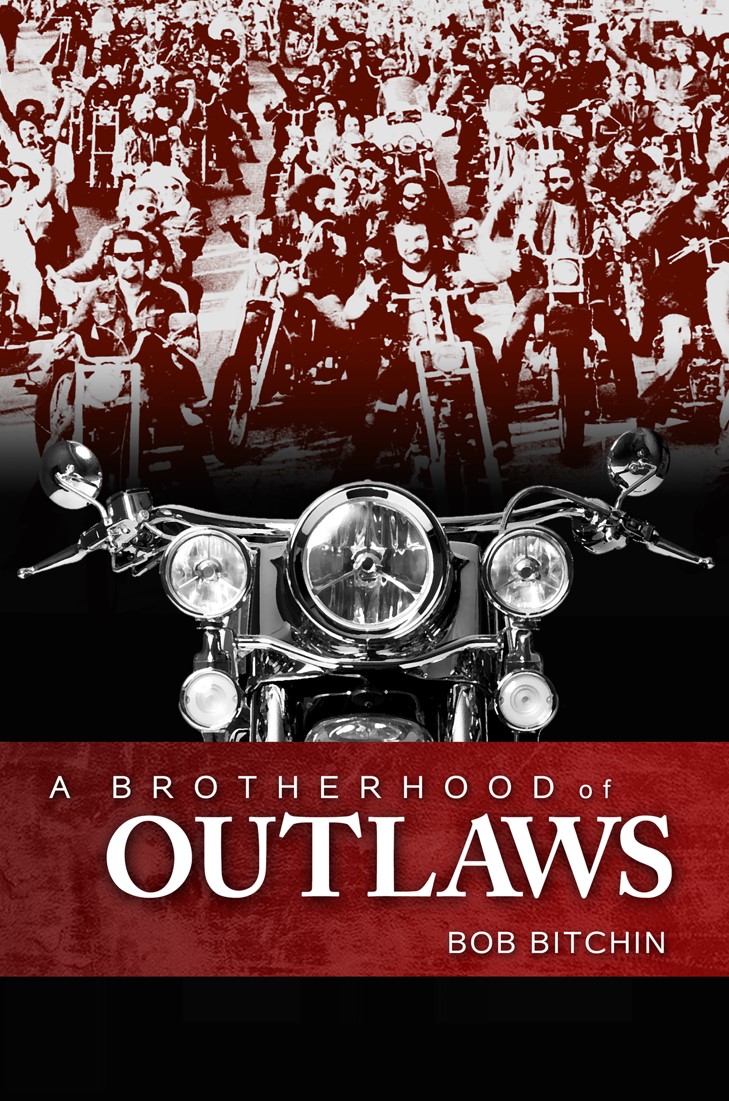
But those days aren’t forgotten. That’s why this book still matters to me. Brotherhood was written when the life it describes was happening all around us. It came out of a world where freedom wasn’t a slogan printed on a T-shirt. It was something you experienced, sometimes paid dearly for, and occasionally had to fight to keep. The people in these pages aren’t meant to be polished heroes. They’re people, with all the good, bad, ugly, funny, and downright stupid things that go along with being human.
This is a story about bikers, but it’s also a story about loyalty, trust, independence, and the strange family we sometimes find when we wander far enough away from the one we were born into. It’s about the people who show up when things go wrong, the friends who don’t need an explanation, and the kind of freedom that comes from knowing you’re responsible for your own choices.
If you rode in those days, I hope this book brings back a few memories. Maybe you’ll remember a particular stretch of highway, a familiar face, or a night that started with one beer and ended somewhere nobody had planned to be. If you weren’t there, I hope the book gives you a taste of what it was like before the old world disappeared around the next bend.
The days of the Biker may be gone, but the spirit doesn’t have to be. You can still find it out on a lonely highway, in a stranger’s willingness to lend a hand, or in the grin of somebody who knows that getting there was never really the point.
Ride hard, look out for your friends, and never confuse the price of a motorcycle with the value of the person riding it.
R.T.L. – L.T.R. and F.T.W.!