
If cruising teaches you anything, it’s that Mother Nature has a wicked sense of humor.
She’ll hand you a postcard-perfect evening, a gentle sunset, and an anchorage so peaceful you start wondering why people spend fortunes on waterfront property. Then, just about the time you’ve poured the second glass of wine and kicked your shoes into a corner, she’ll remind you who’s really in charge.
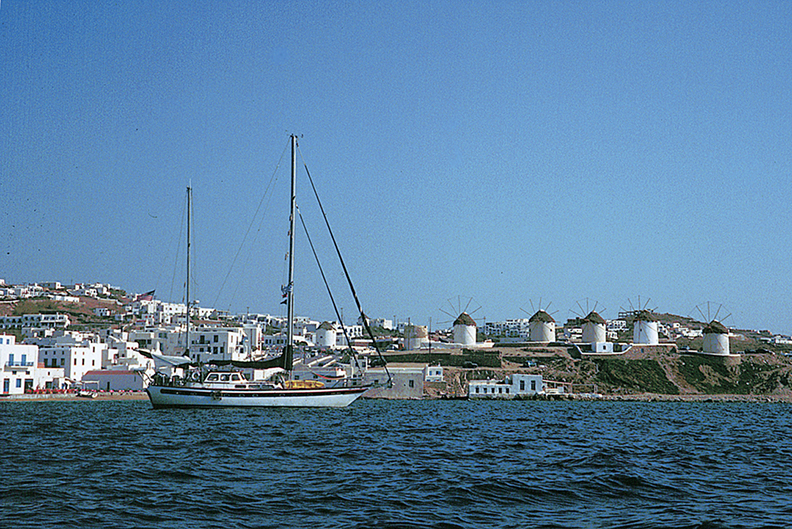
That lesson arrived somewhere off a little Greek island whose whitewashed buildings climbed the hills like spilled sugar cubes. We’d dropped the hook in clear blue water that afternoon, and by sunset the place looked like something painted by an artist who’d never had a bad day. Fishing boats rocked lazily in the harbor, church bells drifted across the bay, and every waterfront taverna seemed determined to outdo the next with music, grilled octopus, and enough ouzo to erase good judgment.
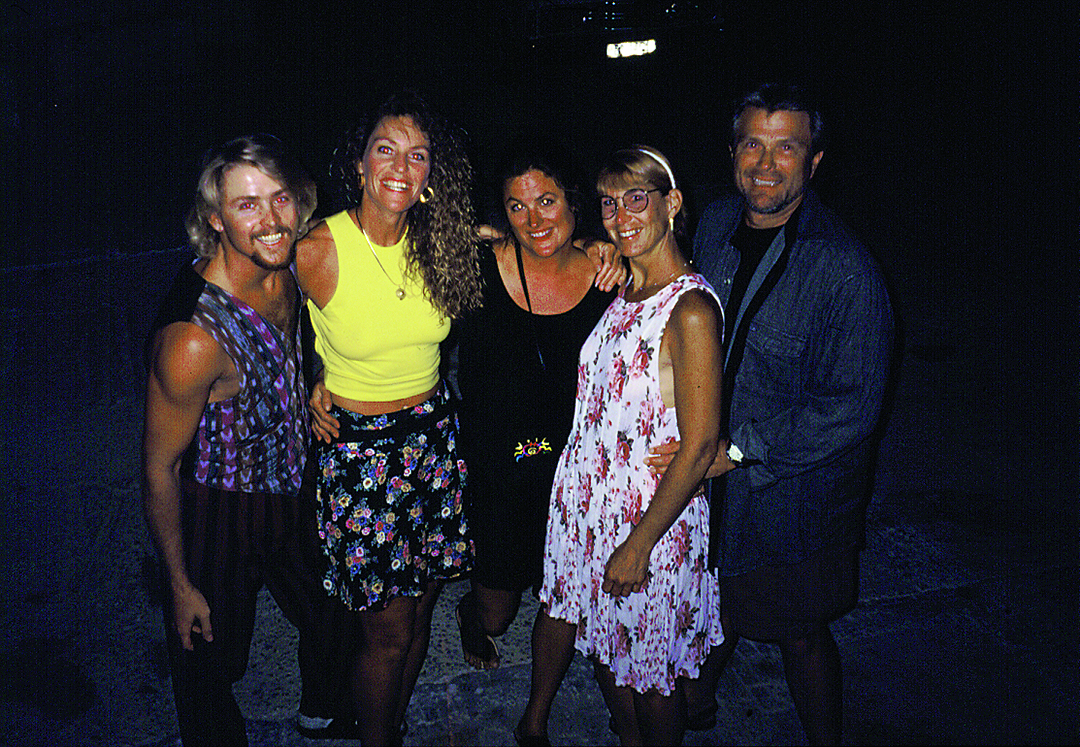
Three members of my crew volunteered for what they called “cultural research.”
Whenever sailors use the word research, somebody’s liver is about to file a complaint.
They loaded themselves into the dinghy carrying more optimism than common sense and promised they’d be back before midnight. I’ve been around boats long enough to know promises made on a dock after sunset have about the same holding power as a bargain-basement anchor.
My wife and I stayed aboard.
Call us boring. We called it civilized.
The boat was quiet, the breeze barely rippled the water, and for the first time in days it felt like the world had finally exhaled. We watched a movie, talked about tomorrow’s sail, and eventually turned in, convinced we’d made the smarter choice.
At exactly the wrong hour, the depth alarm went berserk.
If you’ve never heard one in the middle of the night, imagine a smoke detector married to a fire siren and decided your heart didn’t need a gradual wake-up call.
I was out of the bunk before my brain caught up with my feet.
The cabin sole was cold. The companionway ladder seemed twice as steep. By the time I reached the cockpit the wind had already made itself comfortable.
Not a breeze.
Not even a blow.
This thing had teeth.
The Meltemi had arrived.
Every cruiser in the eastern Mediterranean has a Meltemi story. Most of them begin with confidence and end with apologies to their insurance company.
Thirty-five knots screamed down from the north, flattening the sea into streaks of white and jerking the bow like an impatient dog on a leash. Our anchor, which had behaved perfectly all evening, suddenly developed the work ethic of a government employee on Friday afternoon.
We were dragging.
Straight toward a shoreline made entirely of expensive noises.
Nothing focuses your attention quite like watching granite get larger through the stern rail.
I reached for the starter.
Nothing.
Dead batteries.
Of course.
Boats possess a peculiar intelligence. They know exactly which component will cause the greatest amount of panic if it fails, and they wait until the absolute worst moment to let go.
Generator.
Charge.
Wait.
Every second felt like watching sand trickle through an hourglass while someone slowly pushed your house toward a cliff.
The engine finally barked to life just as I was mentally pricing fiberglass repairs.
We clawed away from the rocks with enough room to spare that I could pretend I’d planned it that way.
Then I looked around.
The dinghy was gone.
Which meant transportation was gone.
Which also meant three members of my crew were still ashore, probably convinced life couldn’t get any better while the boat they called home was conducting emergency drills without them.
Perfect.
Dawn found us playing the world’s most expensive game of yo-yo.
Drop the anchor.
Pay out chain.
Set it.
Watch it drag.
Repeat.
By sunrise I’d become personally acquainted with three hundred feet of anchor chain, enough diesel exhaust to fumigate a village, and several new combinations of profanity that probably violated international maritime treaties.
The wind never let up.
The seas stacked into ugly, square-backed rollers that slapped the hull from every direction. There wasn’t a decent place to hide, and every skipper in the anchorage wore the same expression: equal parts concentration, stubbornness, and regret.
Nobody looked heroic.
Real cruising rarely does.
Eventually one of the local captains waved us toward a sliver of dock tucked behind the ferry basin. It wasn’t exactly protected. Every time a ferry came or went it churned the harbor into something resembling a washing machine, but at least we weren’t grinding our keel into Greek real estate.
About the time we finally got lines ashore, my missing crew wandered down the quay looking like contestants who’d won first prize in an all-night bar crawl.
They grinned.
I didn’t.
They began telling stories about music, dancing, and buying drinks for complete strangers.
I began calculating how many anchor watches equaled one hangover.
Cruising has a funny way of balancing the books.