
Every harbor has its old soul.
It’s rarely the biggest boat at the dock or the newest marina on the chart. More often, it’s the weathered workhorse tucked into a forgotten corner, carrying enough stories in her timbers to fill a wheelhouse library. These are the places that survive changing tides, changing economies, and changing generations, not because they’re fashionable, but because they still serve a purpose.
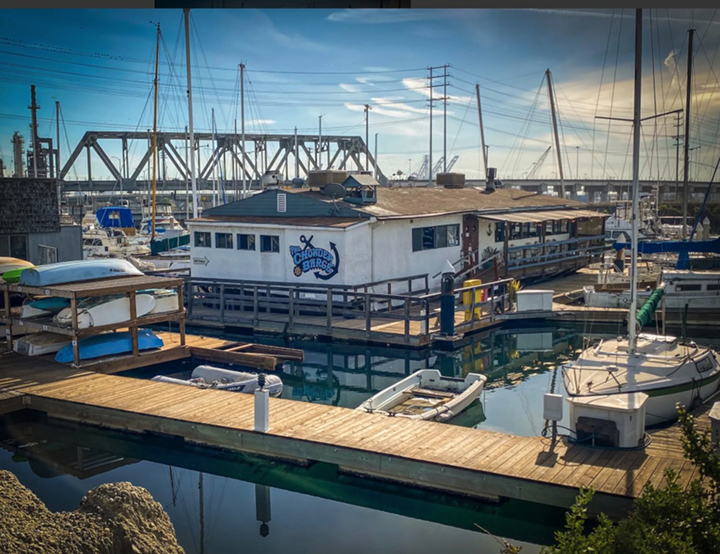
Hidden inside the industrial maze of the Port of Los Angeles floats one of those survivors.
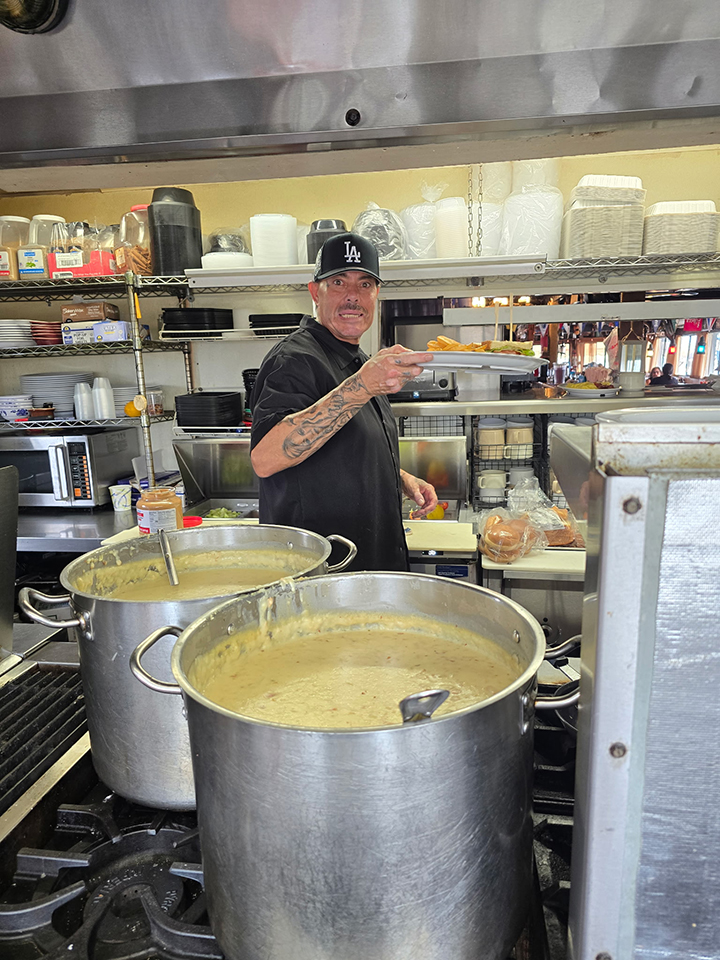
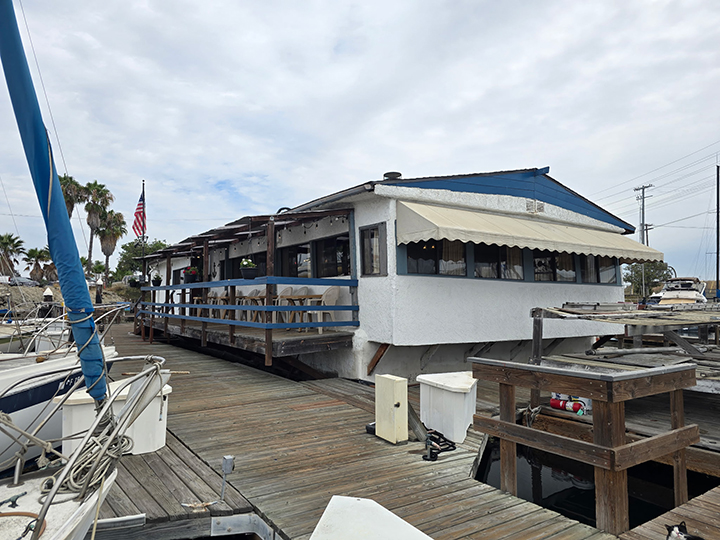
Most people know her today as The Chowder Barge. That’s the name on the sign, and yes, they’ll happily serve you a bowl of chowder and a cold beer. But the food is almost beside the point. The real attraction is the vessel herself, a wooden barge whose unlikely life mirrors the history of Southern California’s waterfront, from Hollywood’s Golden Age to today’s container ports.
Long before anyone ordered lunch aboard her, the barge played a supporting role in one of Hollywood’s grand maritime productions.
In 1935, MGM built a large wooden support barge to accompany the filming of Mutiny on the Bounty, using her as a floating platform for cameras, equipment, and crew while Clark Gable and the rest of the cast recreated life under sail. The movie became a classic. The ships became legends. The humble support barge quietly disappeared into the background, exactly as she had been built to do.
Most movie props enjoy a brief moment of glory before ending up forgotten in a scrapyard.
This one went to sea.
Over the decades, the old wooden hull reinvented herself time and again. Depending on who’s telling the story, she served as a ferry, a floating home, a workshop, and perhaps a few occupations that have grown considerably more colorful with the passing years. Like so many working boats, she adapted to whatever the waterfront needed at the time. She wasn’t preserved as a museum piece. She simply kept earning another day.
That may be the most authentic form of preservation there is.
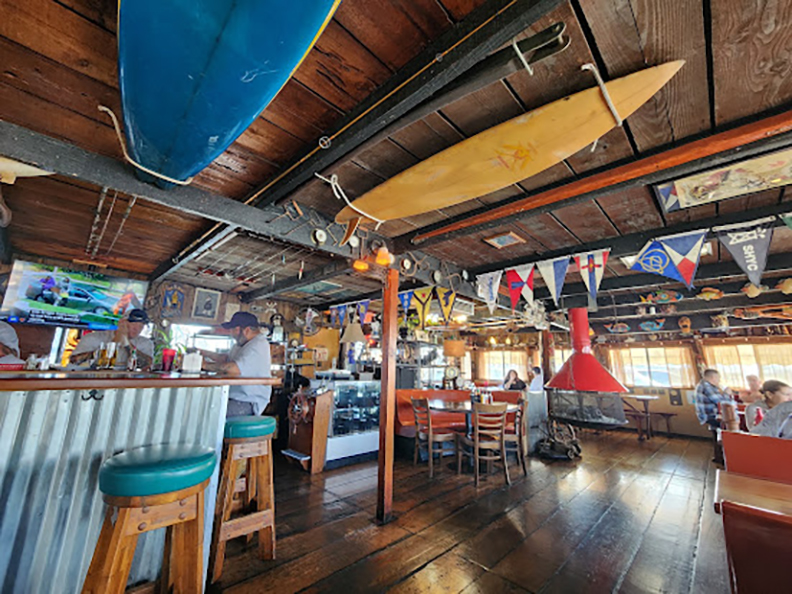
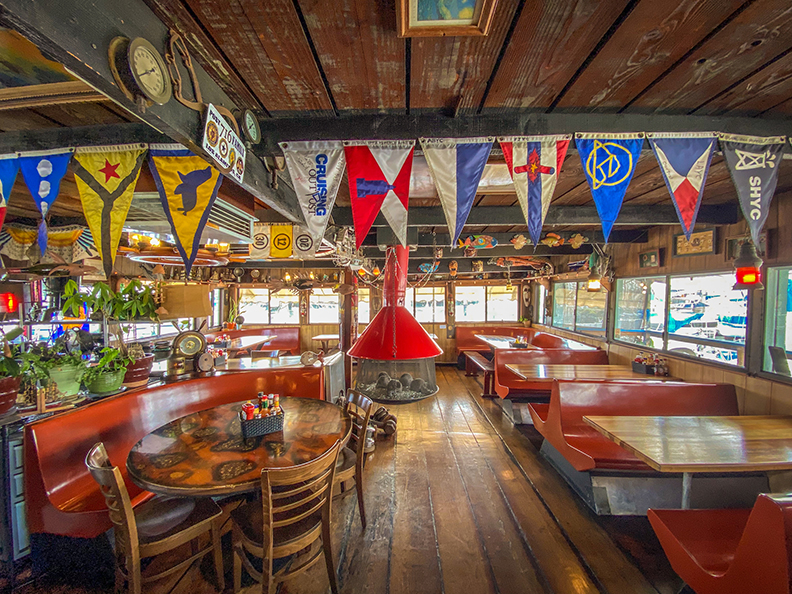
By the late 1960s, Lisle and Mary Panter saw something in the aging hull that others had overlooked. They transformed the neglected barge into a floating gathering place, building a warm wood interior around the vessel’s sturdy bones. It wasn’t designed as a tourist attraction. It was built for the people who already lived and worked on the water.
Commercial fishermen.
Longshoremen.
Mechanics.
Tugboat crews.
Weekend sailors.
Liveaboards who measured wealth in good anchorages rather than real estate.
The people who understood that harbors aren’t just places where boats are kept. They’re communities.
The Port of Los Angeles has always been a place of contradictions.
It’s one of the busiest commercial ports in the world, where container ships arrive with astonishing precision and cranes move cargo with mechanical efficiency. Yet woven between the terminals, rail yards, and warehouses is an older maritime culture that survives almost unnoticed. Small marinas cling to forgotten channels. Independent boatyards continue repairing vessels by hand. Retired captains gather over coffee before sunrise to compare weather forecasts that smartphones confirmed hours earlier.
It’s a world that rarely makes postcards.
But it’s every bit as important as the gleaming waterfront developments that dominate travel brochures.
The Chowder Barge belongs to that older harbor.
She has survived because she has always been useful.
When her aging timbers began to fail decades ago, the owners didn’t abandon her. They hauled her out, reinforced her with concrete and steel, and put her back to work. She still carries a slight list to starboard, a permanent reminder that old vessels accumulate quirks the same way old sailors collect sea stories. Neither is considered a flaw. Both are signs of experience.
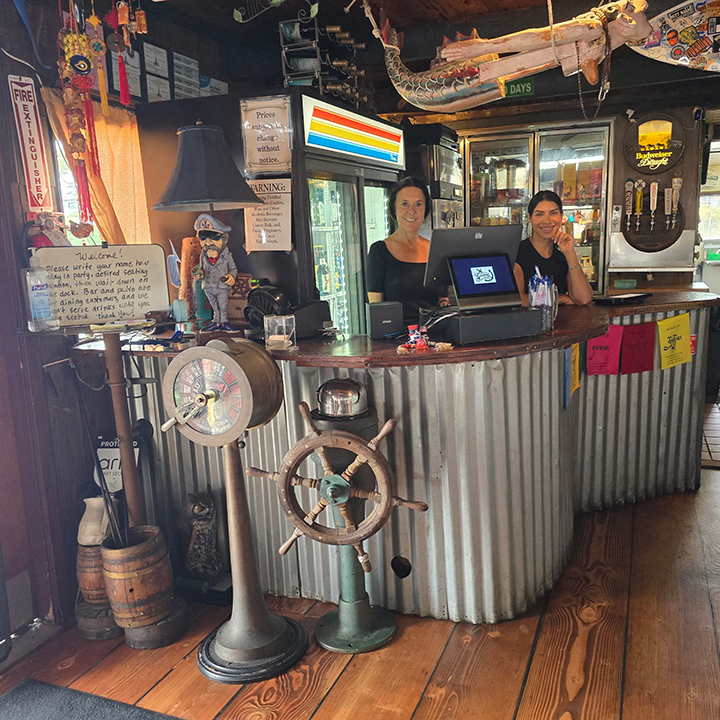
Step aboard today and little feels manufactured.
The polished brass wasn’t polished for decoration. Thousands of hands did that.
The worn wood wasn’t artificially distressed. Time handled the job.
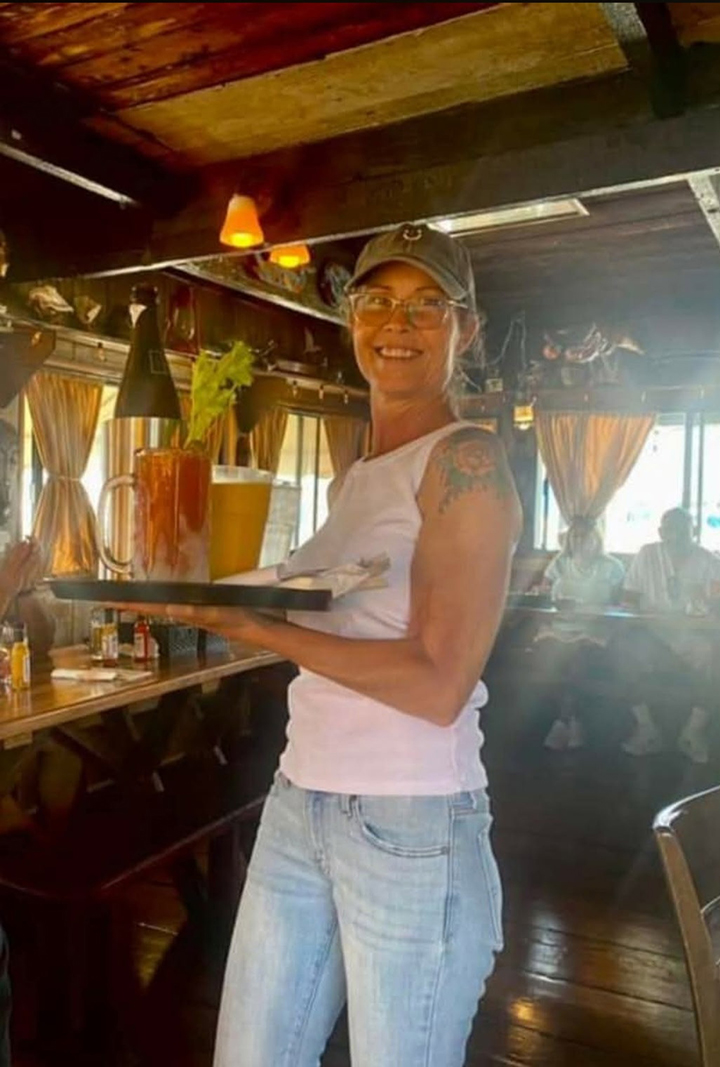
The conversations drifting across the room aren’t curated entertainment. They’re simply the sound of people who have spent their lives around boats sharing another chapter.
Every harbor has places where strangers become shipmates over a cup of coffee or a cold beer.
These gathering spots are as essential to maritime life as fuel docks or chandlers. Information changes hands there. Weather is debated. Mechanical problems are solved. Crew are found. Friendships begin. Sometimes the best chart of local waters is the one sketched on a paper napkin by someone who’s spent forty years navigating them.
You won’t find that on an app.
The waterfront itself continues to evolve.
Container terminals expand. Property values rise. Working marinas face redevelopment. Every year, it seems another corner of the harbor disappears beneath a new layer of concrete, replaced by something cleaner, newer, and infinitely less interesting. Progress is inevitable, but it often comes at the expense of places where maritime culture has quietly flourished for generations.
That’s why old survivors matter.
Not because they’re frozen in time, but because they remind us that a harbor is more than infrastructure. It’s more than cargo statistics and shipping schedules. It’s a living community built around tides, weather, craftsmanship, and the quiet understanding shared by people who earn their living, or simply find their peace, on the water.
The Chowder Barge happens to float.
The story she tells could belong to almost any working harbor in America.
It’s the story of ordinary people keeping extraordinary places alive, one tide at a time.
As long as old boats are repaired instead of discarded, as long as waterfront conversations continue over weathered docks instead of disappearing into history, places like this will remain more than curiosities.
They’ll remain exactly what they’ve always been.
Part of the harbor’s memory.
And every harbor deserves to remember where it came from.