

Mold on boats is one of those quiet troublemakers—it starts as a little musty smell and before you know it, it’s creeping into cushions, lockers, and even your lungs. The combination of moisture, warmth, and limited airflow makes boats the perfect breeding ground. The good news? You can tackle it naturally and keep it from coming back without turning your cabin into a chemical war zone.
Why Mold on Boats Is a Big Deal
Beyond the obvious “that smells like a wet basement” issue, mold can impact your health. Exposure has been linked to respiratory irritation, headaches, fatigue, and can aggravate conditions like asthma or allergies. In a small, enclosed space like a boat, that exposure gets concentrated fast. Not exactly the vibe you want while anchored in paradise.
How to Get Rid of Mold Naturally
First things first—ventilation. Open everything up. Hatches, ports, lockers. Mold hates fresh air almost as much as it hates sunlight.
For cleaning, skip the harsh chemicals and go with these natural options:
- White vinegar: This is your front-line warrior. Spray it directly onto moldy surfaces, let it sit for at least 30 minutes, then scrub and wipe clean. Vinegar actually kills many types of mold at the root.
- Baking soda: Mix with water to create a gentle scrub for surfaces like fiberglass, vinyl, and grout. It also helps deodorize.
- Hydrogen peroxide (3%): A great alternative for tougher spots. Spray, let sit, scrub, wipe.
Essential Oils* for Mold Support
Here’s where things get interesting (and smell a whole lot better):
- Tea Tree Oil: One of the most powerful natural antifungals. Mix about 1 teaspoon with 1 cup of water in a spray bottle. Spray and leave—no need to rinse.
- Clove Oil: Strong, effective, and great for stubborn mold. Use sparingly—it’s potent.
- Eucalyptus Oil: Helps inhibit mold growth and adds that fresh, clean scent.
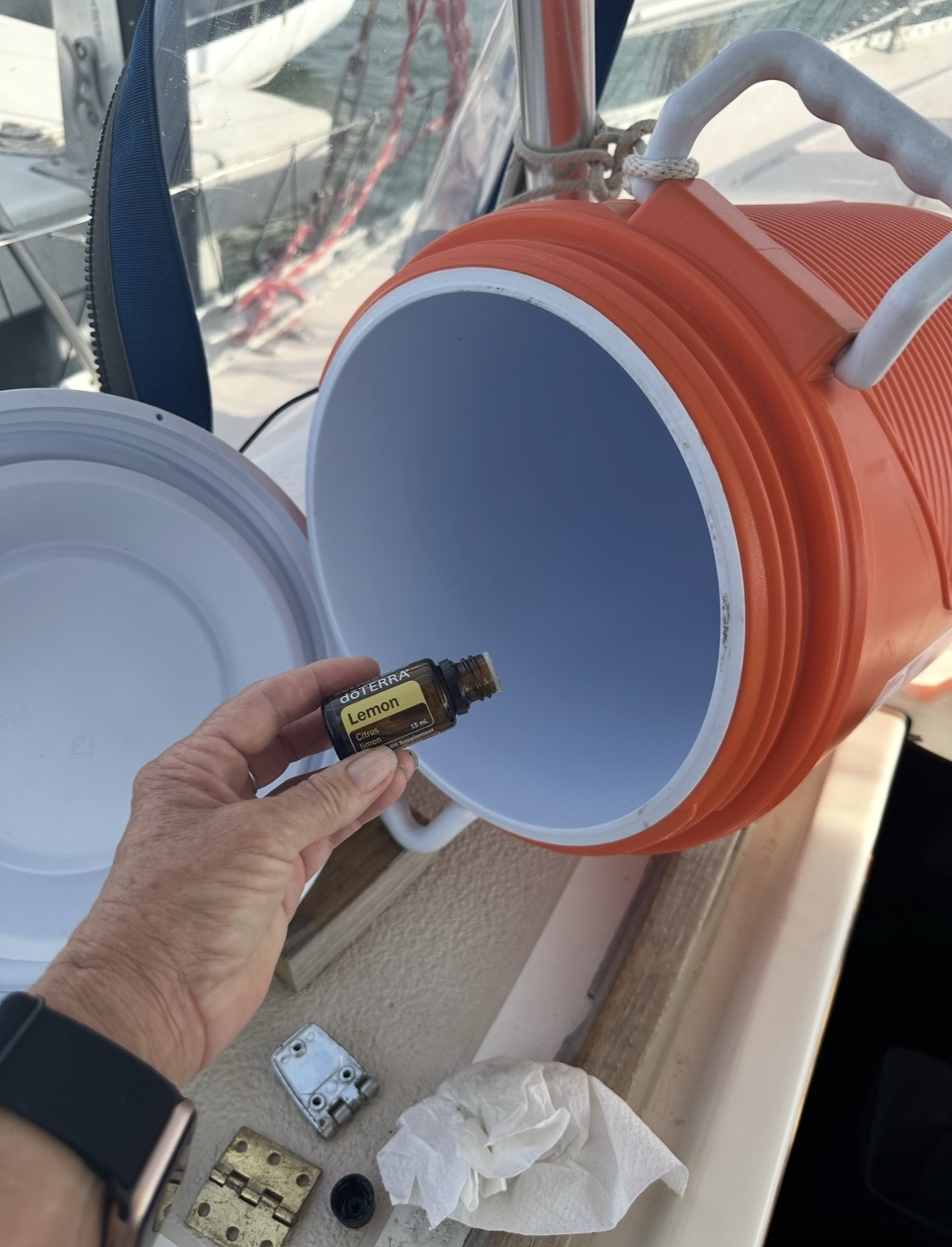
- Lemon Oil: Naturally cleansing and uplifting, plus it cuts through musty odors.
You can combine a few of these with water and a splash of vinegar for a powerful, non-toxic mold spray. Bonus: your boat will smell like a spa instead of a science experiment. *Make sure you are only using CPTG 100% pure essential oils.
Keeping Mold Gone (This Is the Real Game)
Cleaning mold is one thing—keeping it from coming back is where most people drop the ball.
- Control moisture: This is everything. Use moisture absorbers, dehumidifiers (if you have power), or even simple charcoal bags.
- Airflow is non-negotiable: Solar vents, fans, or just cracking hatches whenever possible makes a huge difference.
- Wipe down regularly: Especially after rain or heavy humidity days. Don’t let water sit anywhere—ever.
- Choose breathable materials: If you’re upgrading cushions or fabrics, go mold-resistant and quick-drying.
- Diffuse essential oils: Not just for ambiance—tea tree, eucalyptus, and lemon oils can help keep the environment less inviting to mold.
Final Thought
Mold isn’t just a cleaning issue—it’s an environment issue. If you don’t change the conditions, it will come back like an uninvited guest who knows where you hide the spare key.
Stay dry, keep the air moving, and let nature do a little of the heavy lifting. Your boat (and your lungs) will thank you.
If you’re ready to take this to the next level and create a truly clean, supportive onboard environment, I’d love to help. Reach out to me via email to learn how to confidently use essential oils on your boat—for cleaning, air quality, and overall wellness while you’re living or cruising aboard. And if you’re craving a deeper mind-body connection at sea, I’m currently offering a pre-sale on my updated Yoga Onboard digital program—designed specifically for life on the water. Grab it now at the pre-sale rate here: https://
EMAIL ME AT: Kim@KimHessYoga.com